Building on the Florida coast raises questions an ordinary home never does, about flood zones, elevation, timelines, cost, and how to build for wind and water. These guides put 20+ years of coastal building experience into plain language, covering everything from FEMA flood zones and hurricane-resilient construction to choosing a lot, understanding cost, and deciding whether to buy, build, or elevate. Explore the resources below to move forward on the coast with confidence.
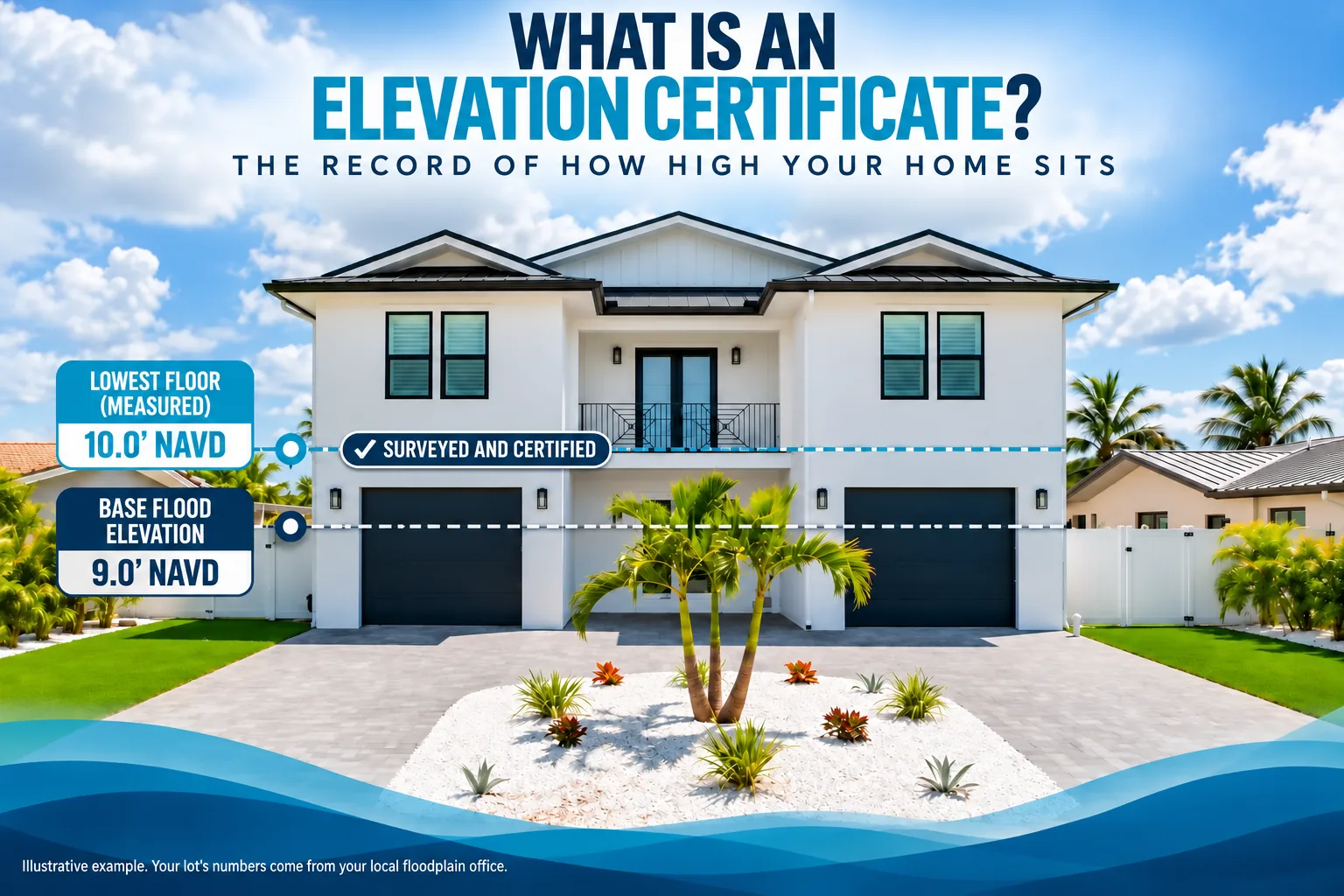
An elevation certificate records how high your home sits compared with the flood level. See what it shows, who prepares it, and when Florida needs one.
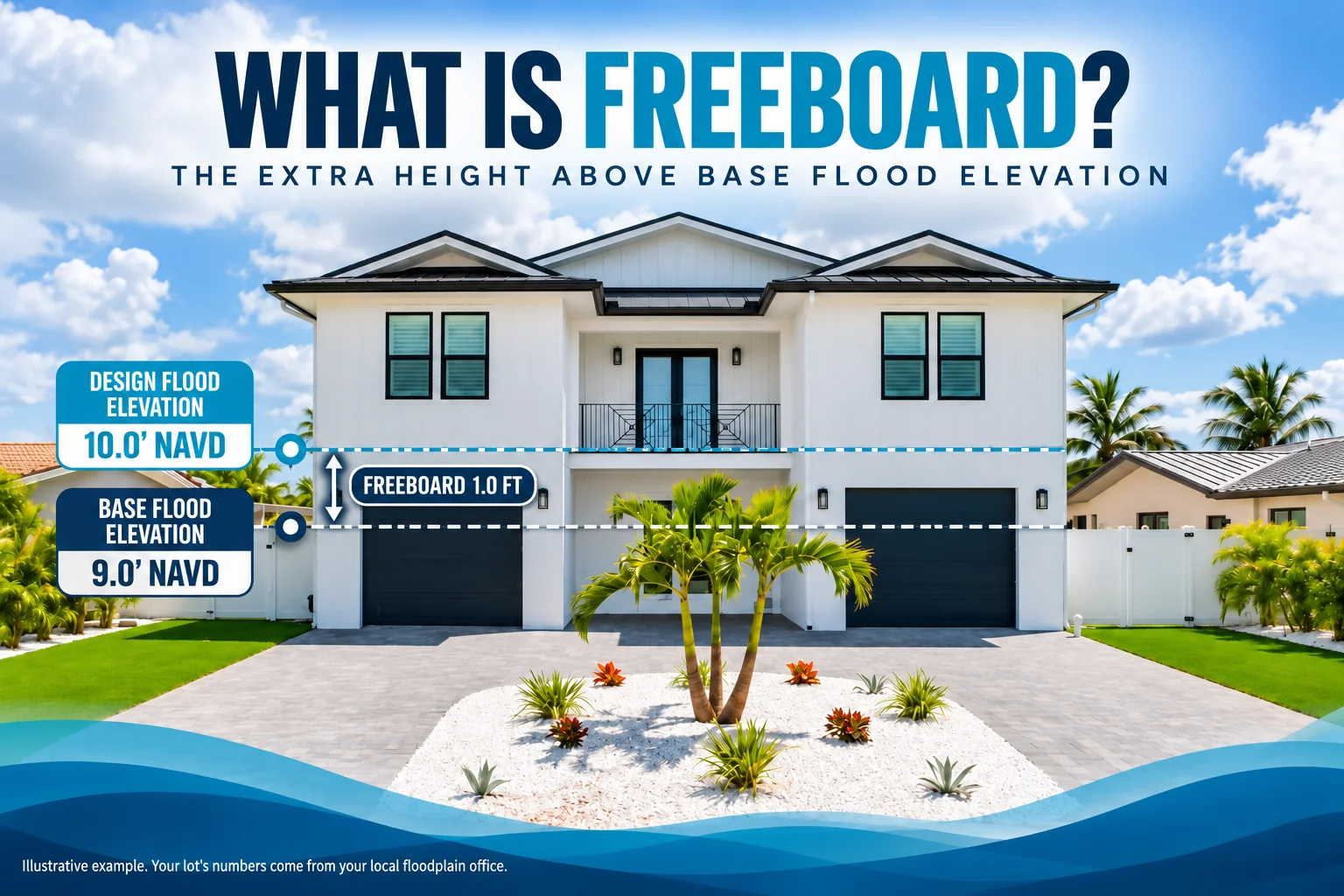
Freeboard is extra height above the base flood elevation. See how it is measured, what Florida's building code requires, and why it matters for your home.
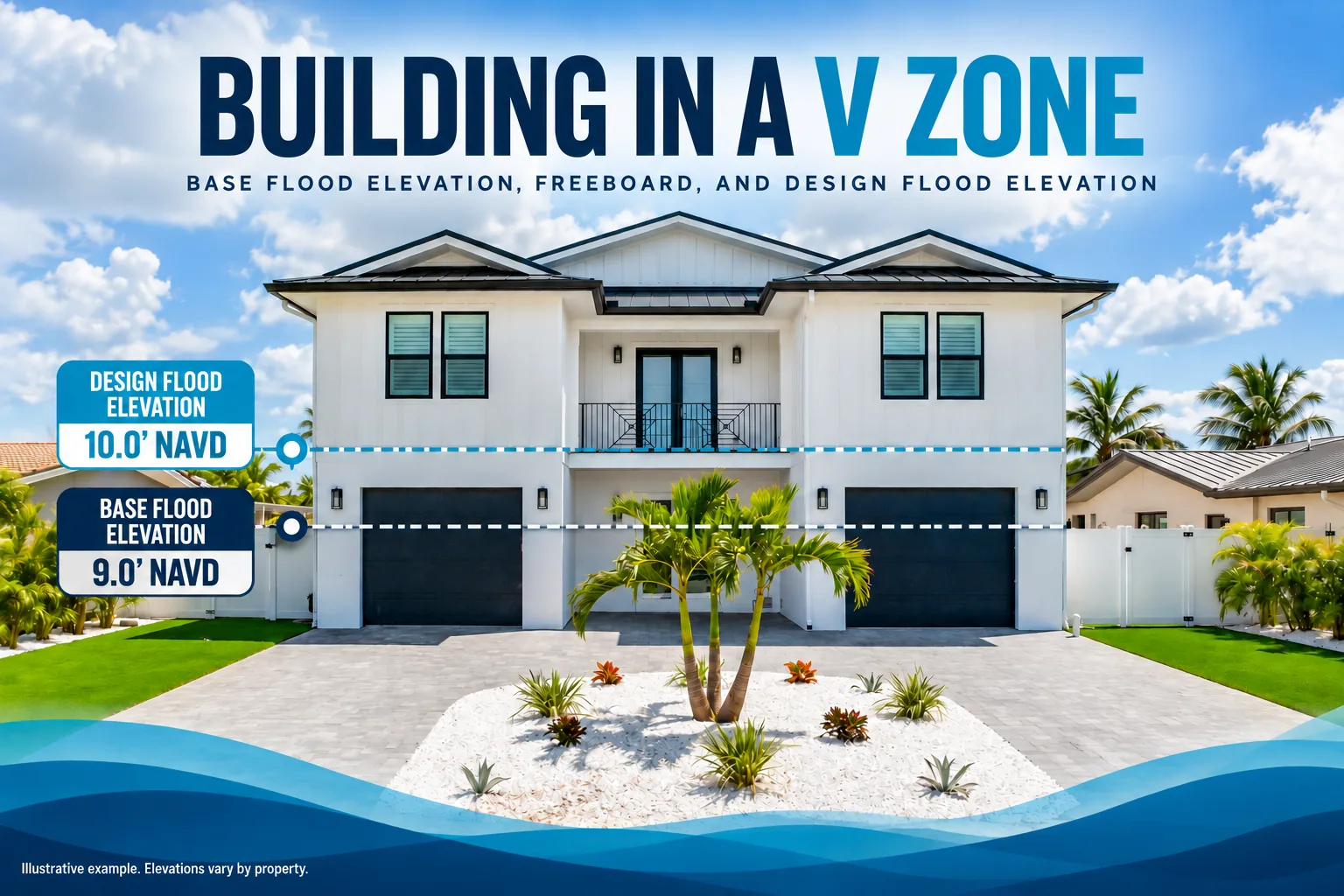
If your property is in a V or VE zone, the flood elevation on the map means something different from the same number in an inland zone, and the rules for what you build below the home are different too.
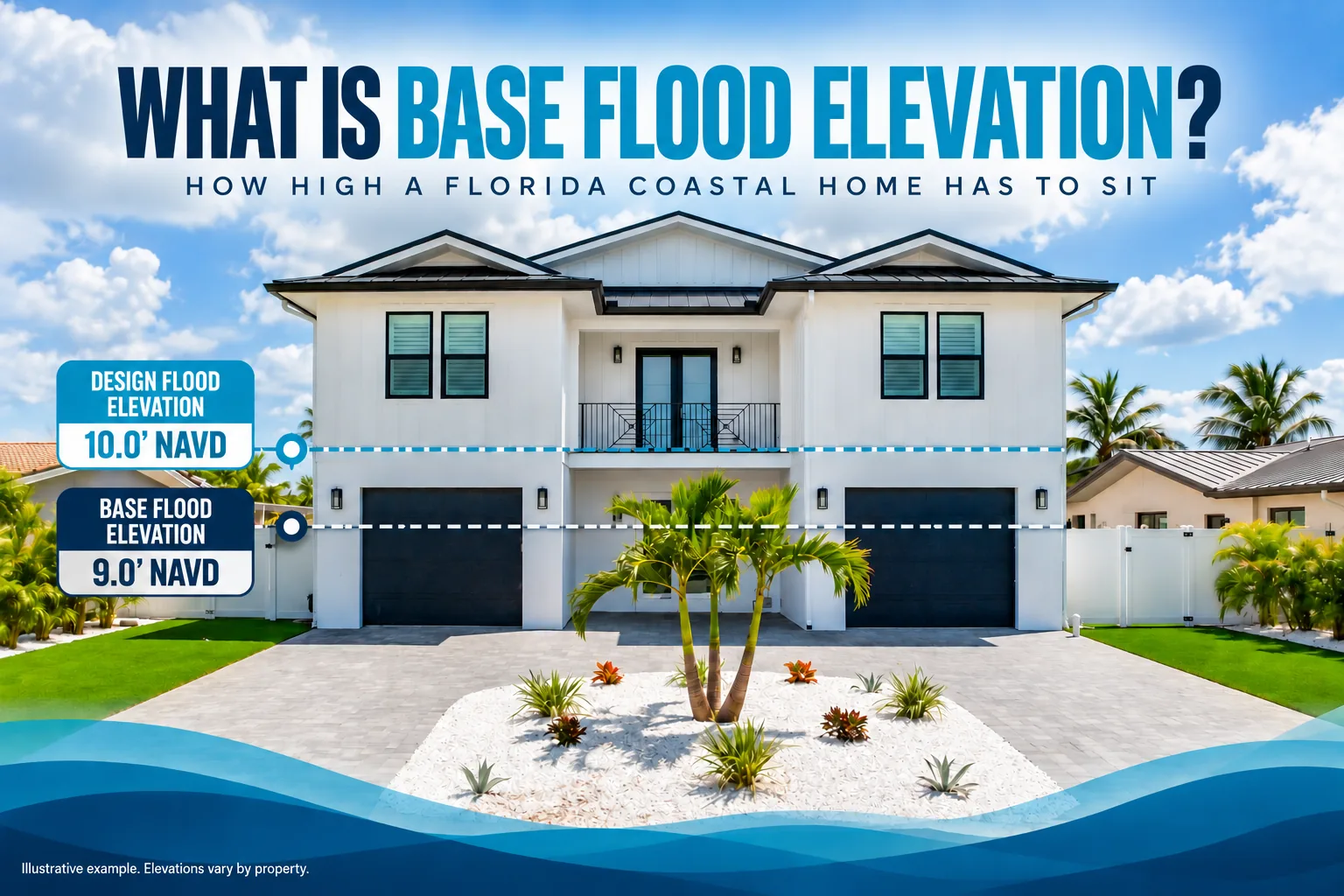
Base flood elevation is the height floodwater is expected to reach during a base flood. Here is what BFE means, how FEMA determines it, how to find the figure for your property, and how it shapes the design of a Florida coastal home.
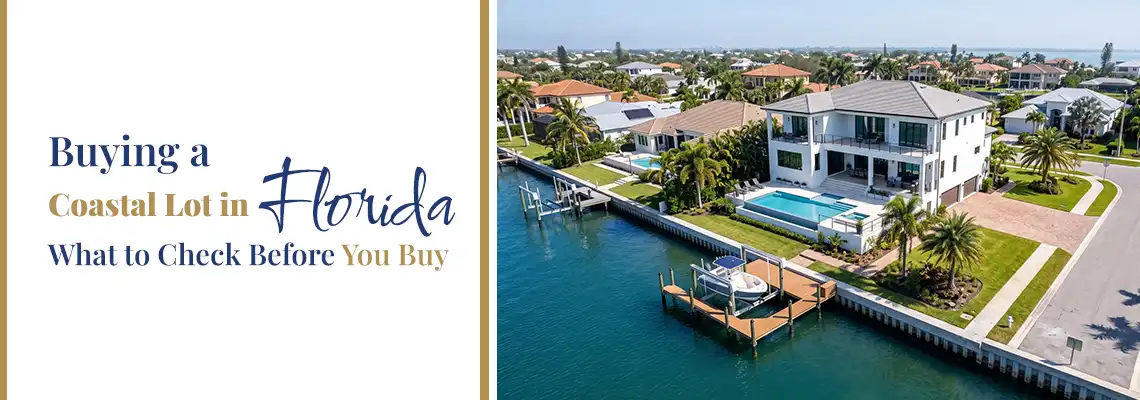
On the coast, the listing price is only part of what a lot will cost. Here is what to check before you buy, including seawalls, docks, setbacks and flood elevation, so the extra costs don't surprise you.
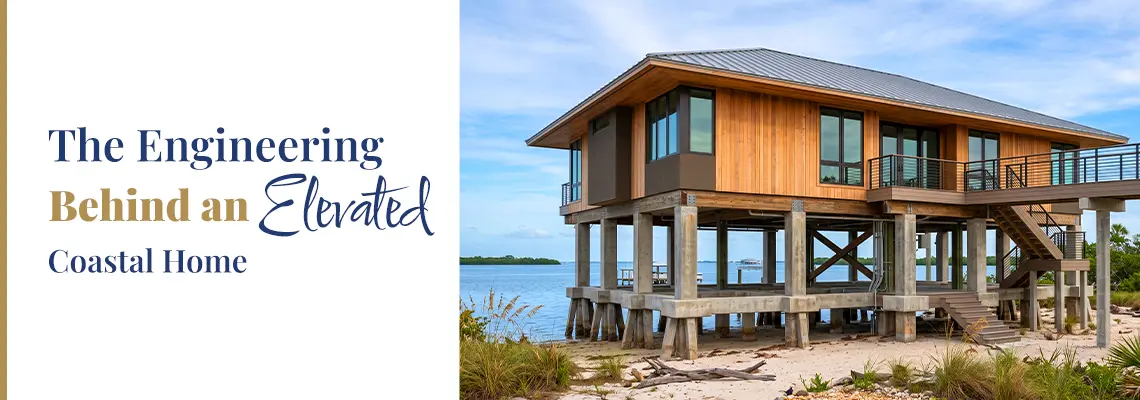
An elevated coastal home is not just a house on stilts. Here is how it is engineered from the soil up, from the foundation and load path to transport, to handle wind and water.
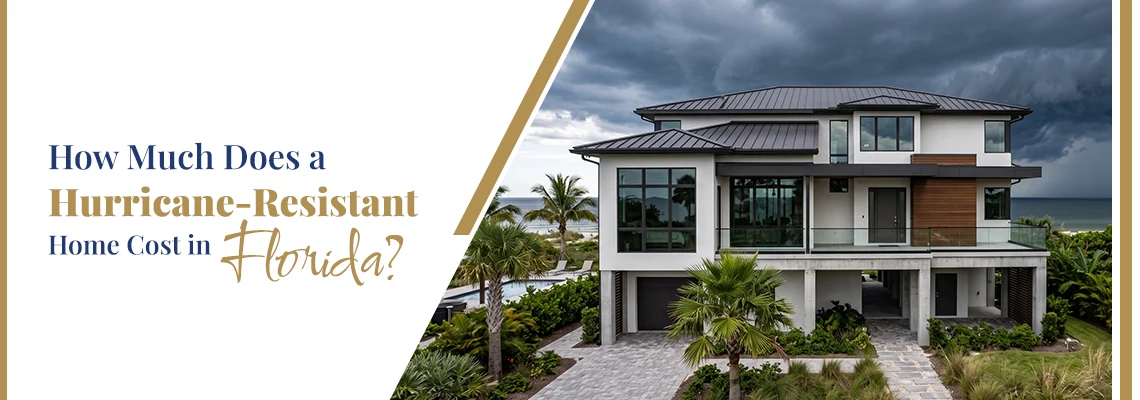
If you're planning to build a home in Florida, one of the first questions you'll probably ask is: How much will it cost to make it hurricane-resistant?
Coastal homes are different from inland builds, so the usual builder questions miss a lot. Here are 10 questions to ask a Florida coastal home builder about pricing, flood zones, timeline, foundations and wind ratings.