
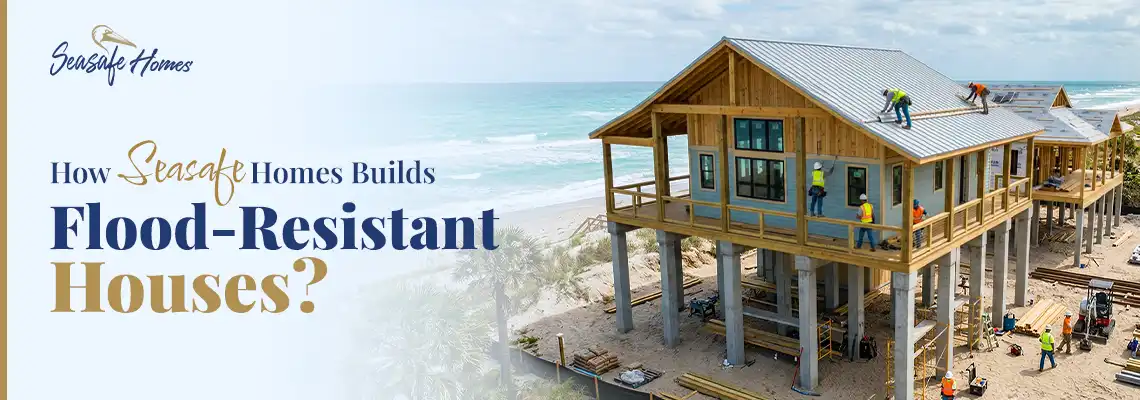
Is it your dream to build a house in the coastal area of Florida? Walking along the white sand beaches with the waves brushing the shoreline is a beautiful vision. But did you ever wonder what happens when it floods?
It can cause significant damage to the home. High-velocity water flow from storm surge and flooding can cause structural damage, resulting in substantial financial losses.
As floodwaters enter the house, they damage everything inside. From walls to furniture and electrical systems, everything will be vulnerable due to water intrusion.
All these challenges can lead to long-term displacement to a different home on higher ground or resorting to life on upper floors. Since storms and flooding are unpredictable, you can help prevent their consequences by incorporating a flood-resistant design into your home.
A flood resistant home will be elevated above the base flood elevation, allowing floodwater to pass below and preventing hydrostatic pressure causing catastrophic damage. In addition to being elevated, the home should be built with flood-resistant materials.
Intentionally designing a flood-resistant home will help can enjoy the costal lifestyle without worrying about the aftermath of flood damage.
Wondering how to build a flood-resistant home? You’ve come to the right place, start your journey to a safer coastal home with Seasafe Homes today.
This blog will explore how Seasafe Homes, with 20+ years of experience building in flood zones, can build reliable flood-resistant houses. Additionally, it will discuss the types of floods you should prepare for in coastal areas.
How Can You Tell if Your Home Is in a Flood Zone?
The first step in building a flood-resistant home is understanding your flood risk. It will help you prepare for a natural disaster. As a result, you can safeguard your property inside and out.
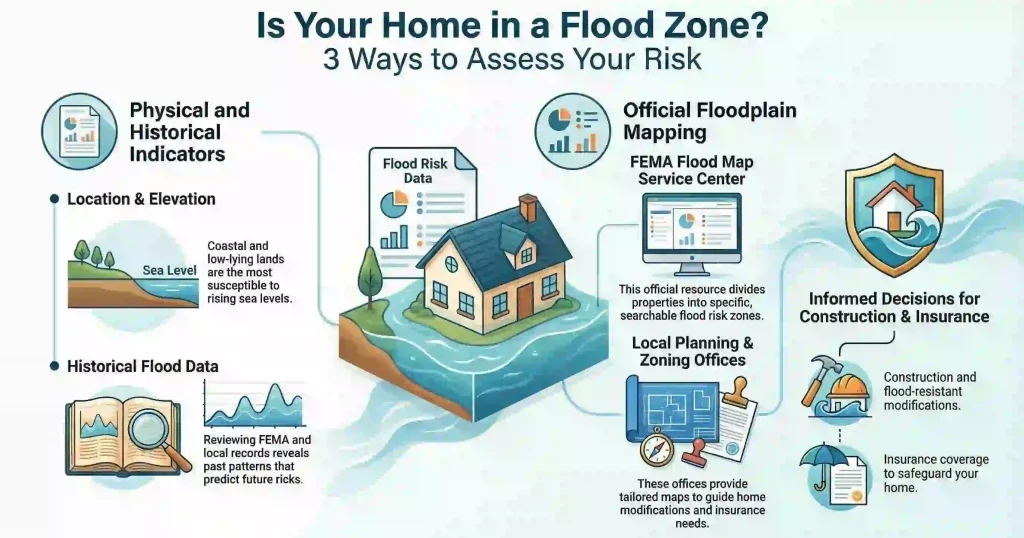
There are three ways to assess whether your house is in a flood-prone area:
-
Location & elevation:
Homes in the coastal regions or low-lying land are more susceptible to flooding. Even houses with poor drainage can suffer water damage during a flood when sea levels rise.
The property’s elevation indicates flood risk. As water rises, it seeps into structures, so elevated house designs are essential.
-
Historical flood data
To determine whether your house is in the flood zone or not, assess the flood data. Such data will give you an understanding of the past flooding events in the area.
You can access such data from local government websites or historical societies. Also, FEMA (Federal Emergency Management Agency) provides essential information about past flooding patterns. This information is a strong indicator of future flood risk, for which you can stay prepared. The local property appraiser website or building departments may have historical information on the home that shows if it has ever been flooded.
-
Floodplain maps
After assessing historical flood data, you should review the floodplain maps. FEMA offers a Flood Map Service Center that divides properties into flood risk zones. When you go through the map, you can analyze whether your house is in a high-risk area.
Moreover, you can get floodplain maps from local planning and zoning offices. They offer plans tailored to your property. With a good understanding of these maps, you can make informed decisions about home modifications and flood insurance.
What Types of Floods Should You Prepare For?
In coastal areas, floods can be unpredictable and dangerous. Houses that are not elevated enough are most affected by floods. Sometimes it can wash away everything present inside the house.
At other times, it may cause significant damage to the foundation and infrastructure. You can witness the unpredictability of coastal floods in the following types:
-
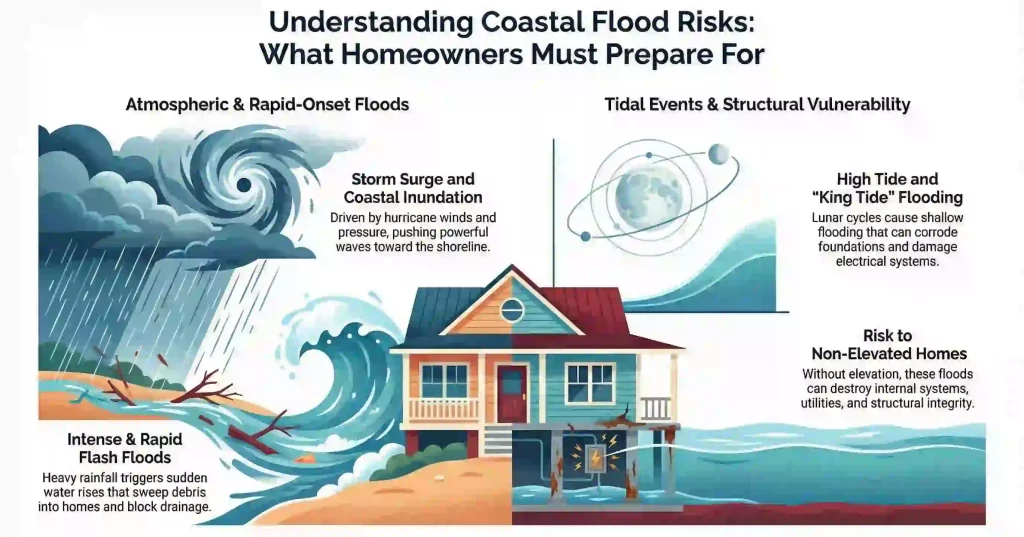
Storm Surge and Coastal Inundation
The rise in water level above normal tide levels is known as a storm surge and coastal inundation. Atmospheric pressure and strong winds cause the phenomenon. Typically, hurricanes create the pressure that pushes the waves to the shore.
It is a dangerous coastal threat that often requires immediate evacuation. As a result, ensure your house has the structural integrity and durability to withstand both storms and waves.
-
Flash Floods
These floods are intense and rapid. Hurricanes in coastal regions trigger rainfall, causing floods within minutes. Such floods significantly raise water levels and sweep debris into houses.
When debris enters your house, it can block the drainage systems. As a result, you may experience stagnant water for days, which can damage infrastructure. To prevent all that, you should look for a flood-resistant house design. It should be elevated above the base level which allows water to flow below and reduce flood risk.
-
High Tide Flooding
Shallow flooding can happen in the coastal regions. These are high-tide floods caused by the full moon. Some of the highest tides occur during King tides, when a supermoon is present and at it’s closest point to the earth.
These floods are generally not life-threatening. However, the floodwater can damage the foundation of your property, electrical outlets, natural gas valves, and drainage systems. To prevent that, ensure the building materials prioritize flood protection.
What are the Steps to Build a Flood-Resistant Elevated Home?
Once you understand whether your house is in a flood zone and the different flood risks in coastal areas, start the building process.
Introducing a home builder, Seasafe Homes, which is focused on using their experience to design and build elevated properties that will reduce your concerns about water damage. Seasafe uses a two-site building construction process to build homes much faster.
It involves off-site building of the living spaces, on-site foundation construction, and then the assembly of the living spaces and foundation. With this approach, we build homes faster. As most of the house is built off-site, it saves additional labor and time on on-site work.
Our foundations are engineered to incorporate reinforced concrete and steel foundations for home building. That way, we ensure you a strong, resistant house that can withstand flooding.
From assessing the pre-construction requirements to reviewing the maintenance, we cover everything to enhance the effectiveness of your flood-resistant home.
The following are the steps that will discuss how to build a flood-resistant home:
1. Pre-Construction Checklist for a Flood-Resistant House
At Seasafe Homes, we follow a pre-construction checklist before starting construction. Our goal is to make the house compliant with FEMA and local guidelines. We are experts at understanding flood zones, so you don’t have to.
To build a modern elevated house for flood zones, the checklist includes:
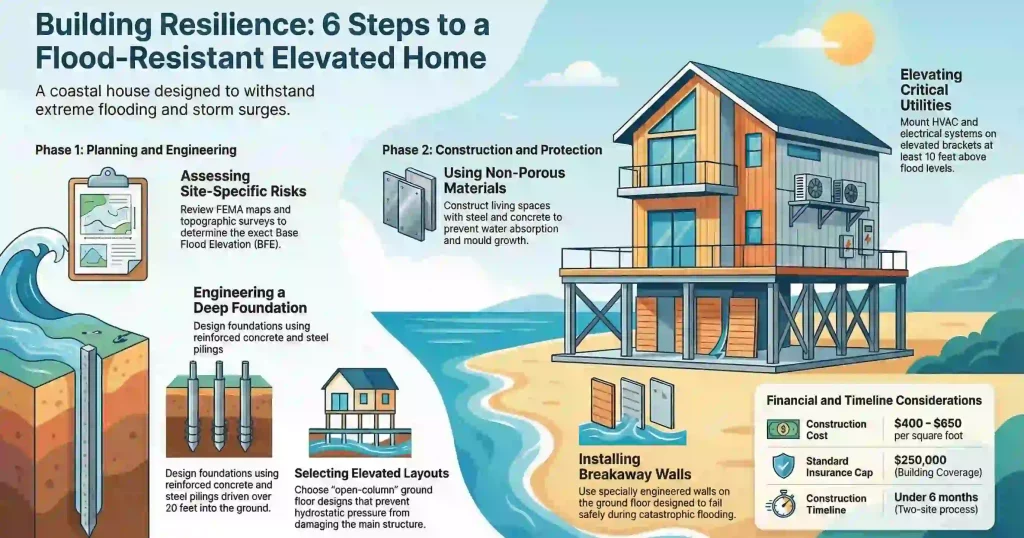
- Check FEMA flood zone maps: We first determine whether your house is in a flood zone. The FEMA compliance allows us to check the flood zone maps. We determine the base flood elevation and design flood elevation of the property to analyze the position of your house.
- Get a Topographic Survey: Elevations are present on a topographic survey. After getting the survey, we can calculate and engineer the on-site foundation needs. Furthermore, we will determine the materials to ensure the foundation withstands storms up to 180 mph and floods.
- Evaluate local building codes and flood regulations: We build homes in accordance with the applicable codes and regulations. We ensure that the lowest floors of the house are 1 foot above the base flood elevation to reduce the impact of the natural disaster.
2. Select an Elevated Home Design
After reviewing the checklist, we begin the design process. Our experts have developed modern beach house and coastal plans that are both aesthetically pleasing and functional. We have different layouts to choose from. Plans may include an open column ground floor or enclosed ground floor with garage doors that can be very helpful as additional garage and storage spaces.
Once you decide on the floorplan, we can begin our two-site construction process. Depending on your requirements, we can also customize the design plans to give them your personalized touch and feel. Some of the home design models that we have created to move through the construction process fast include:
- Wave Crest: Our Wave Crest model features interior and exterior elements to help prepare your home for future floods. The open floor plan, covered porches at every level, and huge kitchen island are a few features that combine efficiency and style.
- Shore Crest: A durable elevated coastal home, Shore Crest minimizes the impact of floods. It includes aesthetic layouts with systems that are adaptable to Florida’s weather conditions. The two-site construction process we follow allows the interior living spaces to be protected from harsh weather while built inside a controlled environment, and the structural foundation elements on-site.
- Paradise Point: The family-friendly Paradise Point elevated home design model we provide ensures a safe living space. Each room features high-efficiency sealed systems and generous insulation to enhance residents’ living standards.
- Salt Cove: Our Salt Cove Model is a combination of innovation, strength, and style. The sturdy masonry walls and elevated concrete columns reduce the impact of storms and floods, common weather challenges in Florida. We also offer a flexible layout for the Salt Cove model, making it suitable for full-time residents and vacation rentals.
3. Design a Flood-Resistant Foundation
Once you choose the design model, we begin construction. Our builders use the two-site construction process to increase delivery efficiency.
The on-site construction process involves designing and engineering the foundation for the house. We assess both vulnerable areas and elevation areas to design a sturdy foundation.
Our goal is to build the house on a strong, durable foundation. For that, we include reinforced concrete and stainless steel in the building process. Our engineers will also evaluate the need for the home to include deep piling pilings that are impacted into the ground over 20 feet deep.
These materials resist hydrostatic pressure and maintain the foundation’s structural integrity.
4. Use Flood-Resistant Building Materials
As we build homes in coastal areas, we ensure we use flood-resistant materials in their design.
We include materials for the building process that will withstand heavy floods. The construction of the living spaces combines steel, lumber, and concrete. As a result, it reduces water impact and effect of building material decay.
Besides floods, strong winds are also common in Florida. To retain the integrity of the houses, our builders use lumber and steel frames for windows and doors.
It will prevent wind from breaking structures, as seen with glass doors and windows. Furthermore, our materials also meet FEMA standards to promote the safety of the house’s residents.
5. Control Water Flow Around the Structure
Floods have the greatest impact on a house’s structure. To minimize the effects of floods in coastal regions, we control water flow.
Our designers build houses above the base flood elevation, commonly adding an additional 1-2 feet above the local requirements for extra security. By doing that, the water flows beneath the base without touching or affecting the living spaces, interior areas that contain furnishings and systems that would be destroyed by flood waters.
We build sturdy structures that will withstand floods and other weather conditions common in coastal areas, including hurricanes.
6. Elevate Utilities and Mechanical Systems
Floods are unpredictable for the coastal regions. You may never know when an intense flood will get inside your property. As that happens, all your utilities and mechanical systems get damaged.
Since replacing new mechanical systems and utilities can be expensive, it is important to prevent such a scenario. That’s where we take care to elevate and protect them.
Masonry walls and pillars can support outdoor electrical and HVAC (heating, ventilation, and air conditioning) systems. These will create a raised structure to prevent damage to the electrical systems. The HVAC systems are commonly secured to an elevated bracket that is anchored off the side of the home, at a height of 10+ feet above base flood elevation.
7. Incorporate Flood Protection Measures
Building a flood-resistant home requires a comprehensive approach that combines the Florida Building Code. Elevating the structures, managing drainage, and securing living spaces are all important tasks that we perform above the base flood elevation.
To ensure the house’s overall safety, we focus on the structure first. For that, we use steel and reinforced concrete pilings. Furthermore, our builders also elevate the lowest living floors above the base flood elevation to reduce the impact of natural disasters.
Below the base, we use flood-resistant materials that include wood timbers, concrete, and steel. It will provide structural strength of the structure and prevent it from corrosion.
8. Ensure Code Compliance and Safety Standards
Houses in coastal regions are subject to certain guidelines. With 20 years of experience in coastal home building, we are well-versed in these standards and regulations. It also involves the FEMA standards.
Keeping high-velocity wave action in mind, we build houses on elevated concrete columns and masonry walls. That way, we let the water flow below the base elevation without stagnating.
Some coastal homes are in what’s called a high velocity zone, meaning that during a storm there is a higher chance of damaging floods and waves. Local codes and FEMA have specific construction rules for homes in these areas which include the use of specially designed walls that will breakaway during catastrophic flooding events. Our engineers design the breakaway walls for these scenarios, this is where experience really matters!
9. Conduct Final Review and Ongoing Maintenance
The final step in building a flood-resistant house is reviewing every detail. After building the structure and the house’s functional parts, we assemble the house using the two-site construction process.
Our builders align the living sections with structural column foundation to ensure they are ready for use. Additionally, we inspect proper elevation to withstand coastal flooding. That way, you can rest assured knowing you have planned for extreme weather events.
Once the building is complete, it is important to maintain it regularly. Check the drainage systems after the flood to prevent debris accumulation.
How Do Elevated Home Designs Prevent Flood Damage?
As you understand the significance of elevated homes in flood-prone areas, let’s understand how they prevent damage. The mechanism of the house, set on columns and deep pilings anchored foundations, allows water to flow beneath and prevents the water from entering the living areas of the home that could be damaged or destroyed by flood waters.
Moreover, it uses techniques such as pilings, grade beams, and masonry columns to reduce the structural resistance to water. Even if the floods are intense, the coastal houses will have the main living space on a raised platform. It will keep the interiors, utilities, and electrical systems dry.
Why Choose Seasafe Homes to Build a Coastal Home?
Weather conditions such as extreme heat and storms in Florida can slow down the home building process. As a result, you need to rely on a builder who can speed up the process.
That’s where we, Seasafe Homes, step in. We use the two-site construction process to build strong, elevated homes faster. The on-site foundation construction and off-site living space construction ensure the project can be completed in less than 6 months.
Since we build the living spaces off-site, we protect the core materials from weather elements, including flooding, rain, and extreme heat. Moreover, we use the same materials, such as pressure treated lumber, reinforced concrete, and steel, as used in traditional homes. It allows homeowners to secure the same construction loan financing as traditional built on-site homes.
We also have customization options for our house models and finishes. You can work alongside our interior designer to choose from the different finish selections, and we will help you assemble them to construct your dream home.
Often overlooked is that the two-site construction process helps reduce material waste and street traffic. Better for the environment while helping save money and neighbourhood disruption in the long run.
Build Flood-Resistant Homes with Seasafe Homes!
As you understand how to build a flood-resistant home, it’s time to design one for the coastal areas of Florida. For that, you can rely on Seasafe Homes.
We have 20 years of experience designing strong, flood-resistant houses. With our two-site construction process, we can build a strong foundation and coastal living spaces in 6 months.
Moreover, our team uses FEMA-compliant standards to build homes that commonly exceed the local building codes to withstand storms and floods. With us, you can also learn how to build a hurricane-resistant home that is both functional and stylish.
Get in touch with Seasafe Homes and create your dream coastal home by the shore!
FAQs About Flood-Resistant Homes
1. Is drywall safe to use in flood-prone areas?
Traditional drywall is generally not safe for flood-prone areas. The highly porous content quickly absorbs water, leading to mold growth. Also, it causes swelling in exterior walls and structural failure, requiring full replacement. However, when the drywall is used for house construction in a weather-resistant environment, it retains its quality and durability.
2. What Building Materials Are Best for Flood-Prone Areas?
The building materials for flood-prone areas are non-porous, water-resistant, and capable of withstanding submersion. These materials include concrete (for the foundation), steel (for door and window framing), and cement boards (siding). These materials will incorporate elevated construction to reduce the risk of flooding. Stucco is commonly used on ground floor areas to finish the concrete and then painted.
3. How much does it cost to build a flood-resistant home?
Typically, the cost to build a flood-resistant home ranges from $400 to $650 per square foot. The elevated structures on masonry columns make flood-resistant homes more expensive than traditional construction that does not require being elevated. However, in the long run, these homes are worth the investment.
4. Do flood barriers really work?
Yes, flood barriers are a great upgrade to traditional sandbags. They prevent floodwaters from damaging homes and infrastructure. They range from temporary interlocking panels to permanent self-rising barriers. These structures can withstand high-pressure water to prevent coastal and storm-driven flooding. Make sure you understand assembly and storage requirements when considering the systems. You do not want to purchase them and have no place to store or need to set them up when a storm is approaching and cannot properly assemble.
5. Will flood insurance cover the cost to build a new home?
No, flood insurance is typically capped at $250,000. While this is a lot of money, it is likely not sufficient to build a new, elevated coastal home. Flood insurance can be helpful to cover repairs or replacements of existing structures to the pre-flood conditions. But for more substantial needs like a new home, the insurance may not be enough to cover all the costs.
