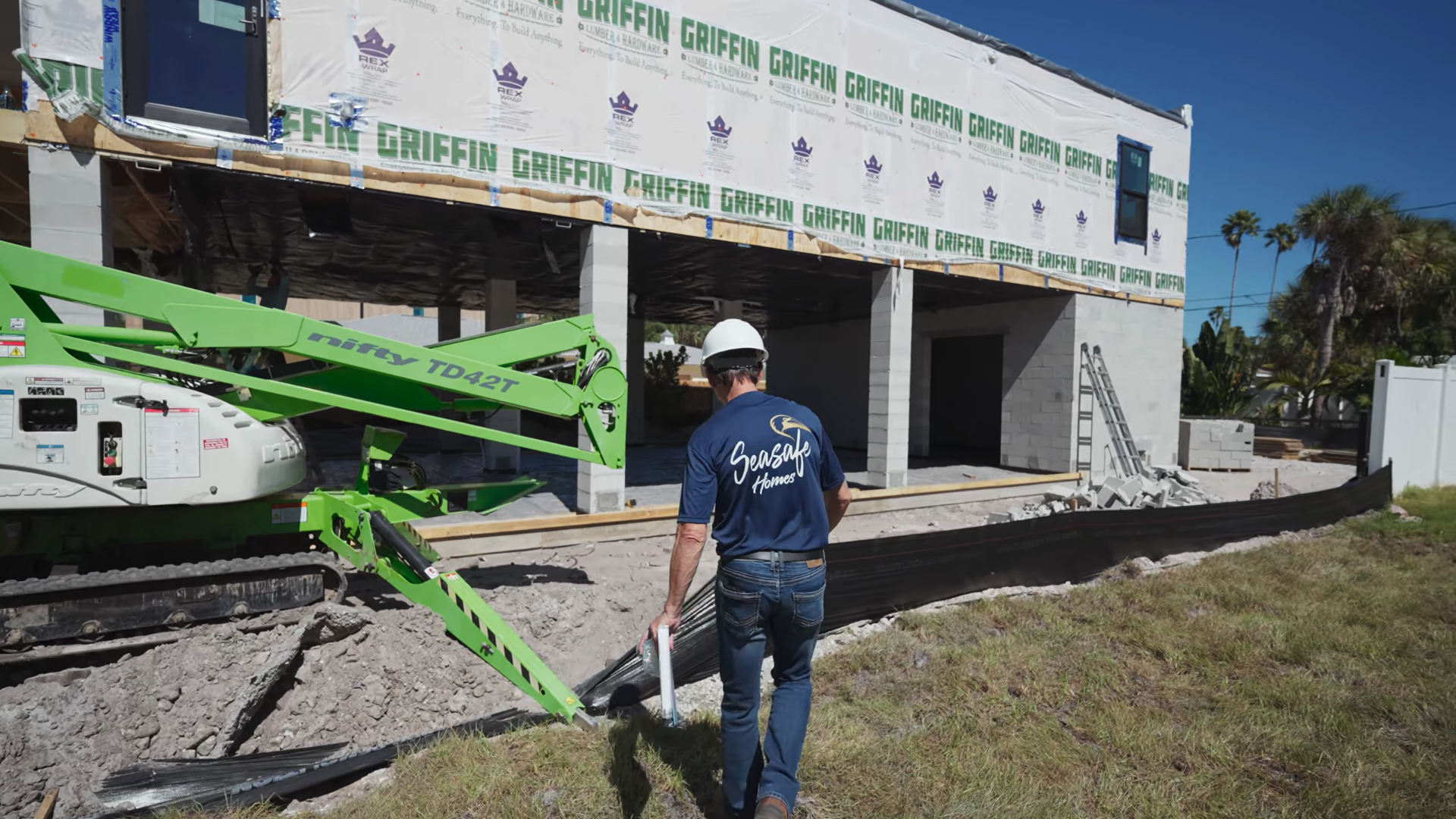
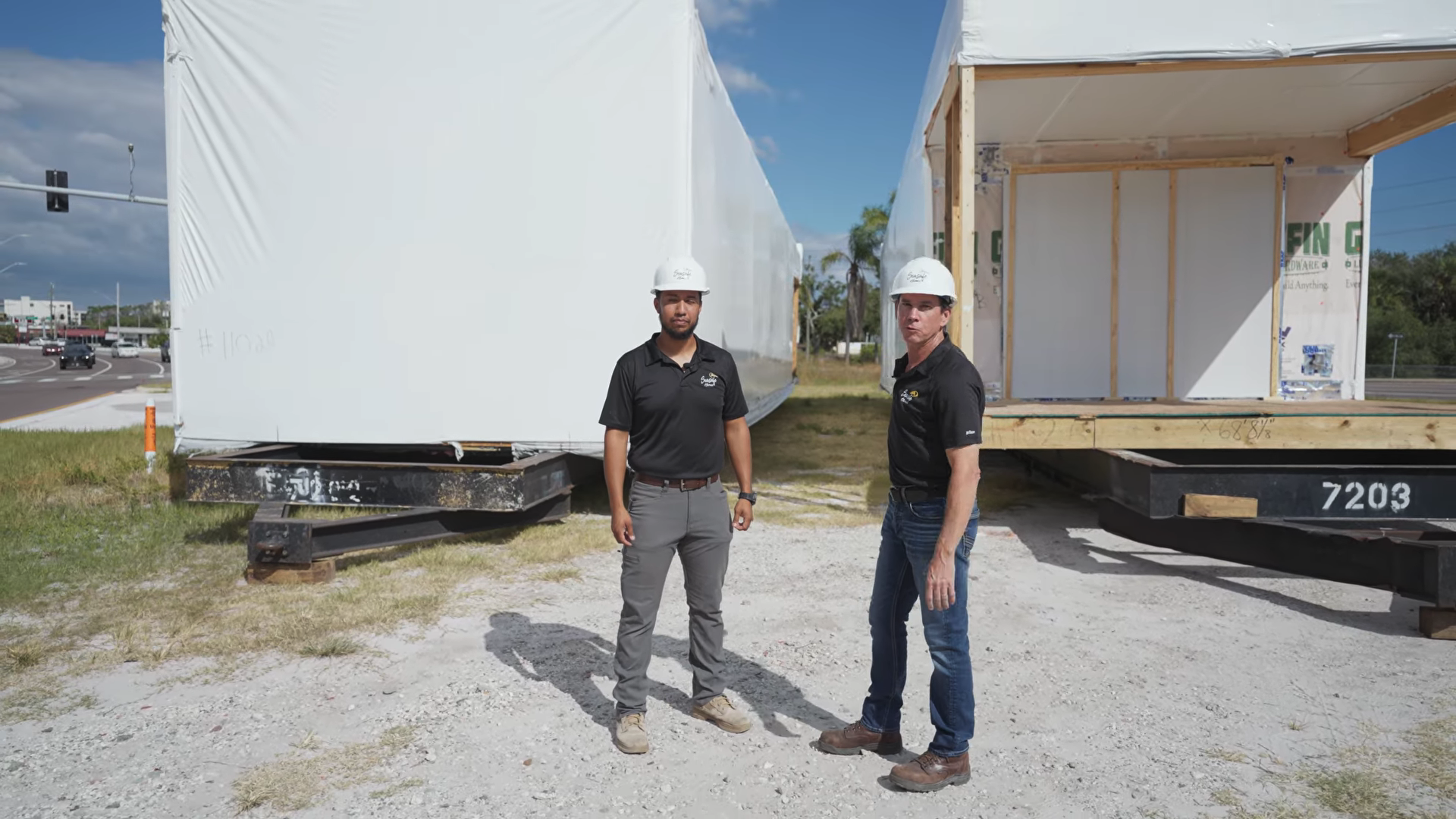
Seasafe Homes uses Two-Site Construction to build your elevated coastal or waterfront home more efficiently. While the foundation and site work progress onsite, the living space sections are built in the offsite Build Center.
Flood zones, hurricane exposure, and strict building codes require a construction process that reduces risk throughout the building process. At Seasafe Homes, quality control and field inspection are included in the construction process before a home is even set on its foundation.
Seasafe Homes uses a Two-Site Construction process. Living space is built in a controlled offsite environment while foundations and structural masonry (concrete and steel) are built onsite. This allows multiple phases of construction to happen at the same time instead of the traditional method of one step at a time. The result is a faster, more predictable timeline with less exposure to weather, moisture, and jobsite delays.
Before the living spaces are transported to the final homesite, Seasafe performs a quality control inspection. This inspection is led by the engineering and field supervision team and focuses on both structural integrity and finish protection. Key items verified before delivery include: Structural strapping and hurricane connections are verified per engineered plans Protection of finishes, windows, cabinetry, and interior systems and notes taken if flaws are seen Verification of electrical, plumbing, and mechanical rough-ins per the plan designs Confirmation that living sections have not been exposed to rain or moisture Because living sections are built in a controlled environment, materials are never exposed to the Florida rains, humidity, or storm conditions during the Build center construction. This reduces the risk of warping, mold, deterioration, and long term performance issues.
Set day is when the living spaces that were delivered in sections are placed onto the elevated foundation using a crane. After the crane set, Seasafe transitions immediately into onsite assembly and structural integration. This begins the final phase of construction, bringing together the offsite and onsite progress. Critical onsite work completed after set day includes: Alignment of living sections with structural columns Installation of hurricane strapping per engineering plans Connection of multiple living space sections along the mate line Structural tying into columns and foundation systems using bolts, straps, and materials in engineered design This work secures the home to the foundation and prepares it to perform as designed during hurricane and flood events.
Coastal homes must allow water to move safely beneath the structure during storm surge and flooding. Seasafe integrates flood code requirements directly into the construction process. Onsite assembly includes: Installation of flood vent openings sized per code Preparation for finished flood vents that meet both performance and appearance goals Coordination of ground level design options such as open parking, storage, or breakout walls These details are addressed before exterior finishes begin to ensure compliance and reduce inspection delays. Interior condition after set day Many homeowners are surprised by how complete the home is after set day. Inside the living space, major components are already in place, including: Windows and sliding glass doors Cabinetry and countertops Bathrooms with tile, fixtures, and recessed lighting Ducted air conditioning systems Electrical and plumbing rough-ins Remaining work focuses on connections between sections, trim, flooring, paint, and exterior finishes.
Traditional coastal construction often exposes materials to months of rain, humidity, and storm delays before a home is dried in.
Seasafe Homes reduces these risks by:
This approach protects the home during construction and improves long term durability.
This construction method benefits both homeowners and investors.
Homeowners gain confidence knowing their home was inspected before delivery and assembled with hurricane and flood performance in mind.
Investors benefit from reduced timeline risk, predictable sequencing, and faster delivery compared to traditional coastal builds.
Set day is when the living sections are placed onto the elevated foundation using a crane. It marks the transition from delivery to onsite assembly.
Living sections typically arrive about 75 to 80 percent complete, including major interior systems and finishes.
Inspecting before delivery ensures structural connections, finish protection, and systems are verified before the home is exposed to the jobsite.
No. This is a construction method. Living sections are part of a code compliant coastal home designed for flood zones and hurricane exposure.
If you are planning to build in a flood zone or coastal community, understanding how a home is inspected and assembled matters.
Seasafe Homes designs, inspects, and assembles elevated coastal homes using a deliberate process built for Florida conditions.
Explore our build process videos to see how quality control and onsite assembly work in real projects