
Typical Seasafe Home Construction Price
$500,000 to $900,000
Fully finished, elevated coastal homes.
What's Included
Additional Costs to Plan For
Your final investment depends on your home plan, finish selections, and property conditions. Final pricing is set in your build contract, which we call the Build Agreement.
Pre-engineered plans you personalize
Engineered to a 180 MPH wind rating for coastal conditions
Your build contract defines the price and included features
What is quoted is what is delivered. Your build contract, which we call the Build Agreement, spells out the price and every included item before you commit, and explains how any price change would be handled. Standard features include:
42-inch upper cabinets with plywood cabinet boxes
Quartz surfaces included as standard
Smooth drywall and all hard-surface flooring
Hardie siding, soffits and fascia
Impact-rated windows and doors
1-year workmanship, 2-year systems and 10-year structural coverage. Terms are in the warranty document.
Three things decide where your home lands in that range.
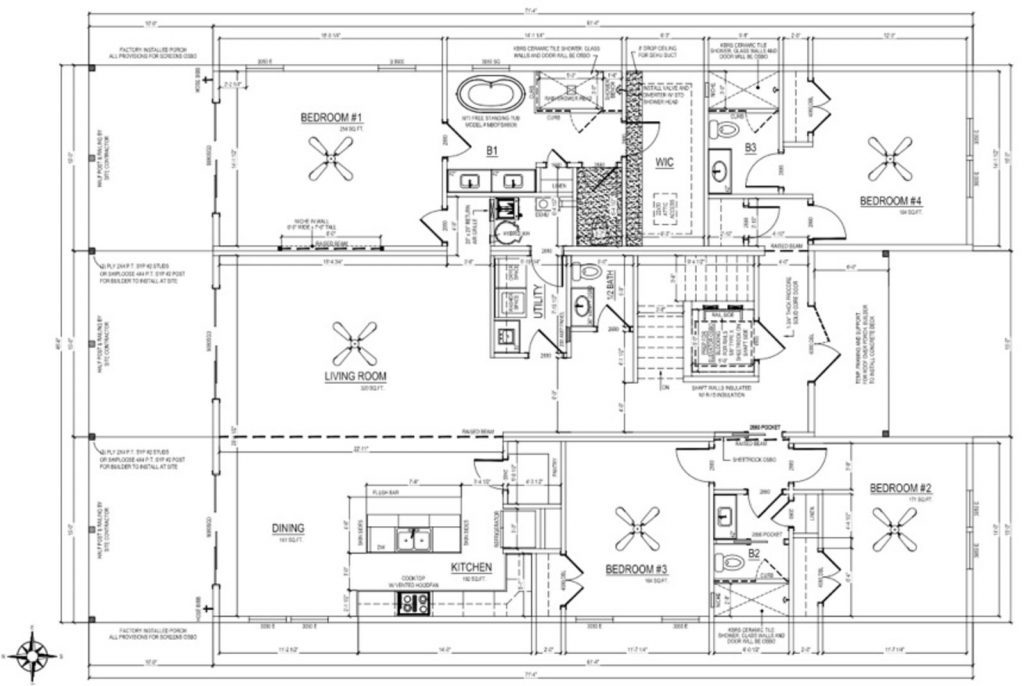
Square footage, layout, number of living levels, and options such as an elevator. Browse our home plans.
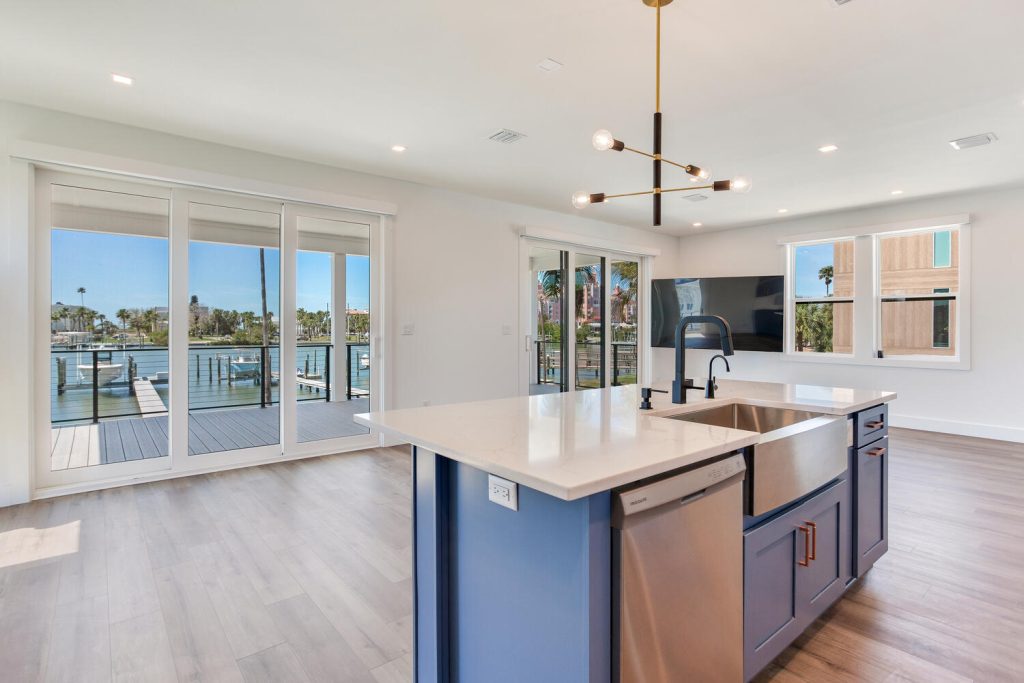
Cabinetry, countertops, flooring, fixtures, siding, and other personal selections from curated collections. See how designing your home works.
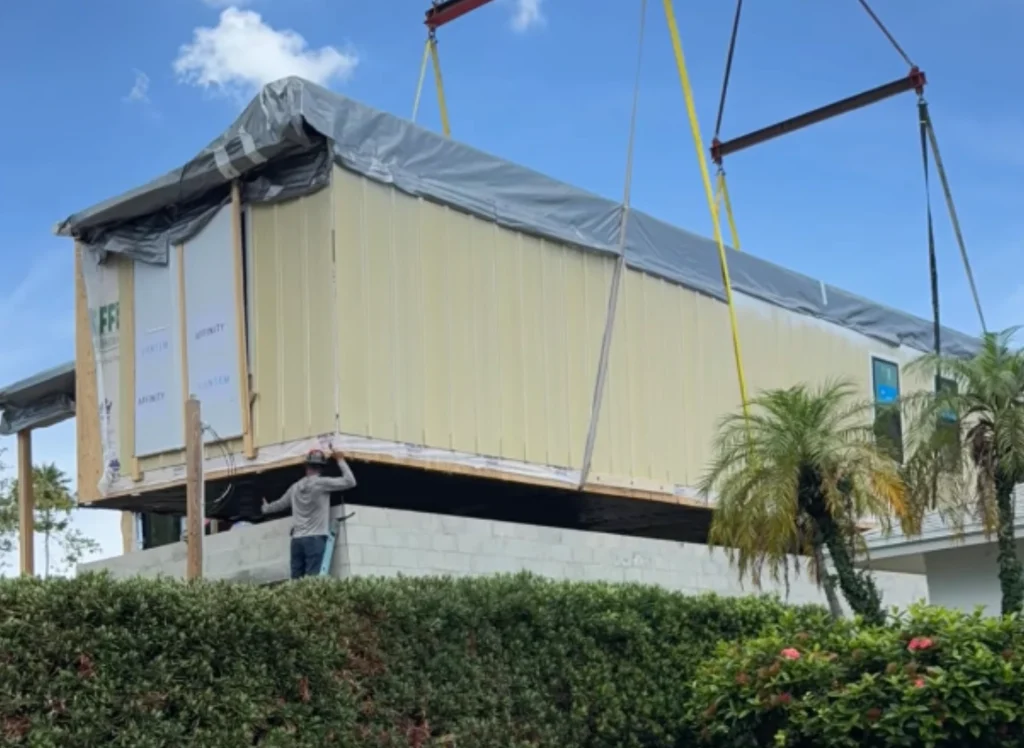
Foundation requirements, flood elevation, construction access, and site preparation. This is often the biggest variable.
We start from proven, pre-engineered plans, so cost is more predictable than a fully custom design. The main variables are your selections and your site, not structural unknowns.
Seasafe Homes focuses on coastal construction in Florida flood zones. Before you buy, we can help you evaluate a lot and understand what it will take to build on it. The lot can change your total as much as the plan.
The lot price is only part of what you pay to build on it. Before you buy, check:
Age, condition, and replacement cost, which can be major
Condition and water depth at low tide
Removal of any home or structure already on the lot
Clearing trees and vegetation in the building area
The real building footprint after setbacks
Base flood elevation and whether fill is needed
Site elevation and drainage, confirmed by a survey
Soil conditions and whether deep pilings are needed
We require a topographic survey on every lot, and a soil study tells the engineer whether the lot needs deep pilings. When deep pilings are required, they can increase the cost of your home’s foundation by $40,000 or more. Seasafe accounts for these foundation requirements when determining your quoted construction price. A single large tree in the build area can run thousands to remove. Our coastal lot buying checklist goes through each item.
Two properties can have similar asking prices but very different costs to prepare for construction. Compare the total investment before choosing your lot.
Although Lot A costs $25,000 more to purchase, its estimated total lot investment is $90,000 lower.
Illustrative example only. Actual site preparation costs vary by property, conditions, and local requirements.
This is a typical draw schedule. The first payment is made when you sign the Build Agreement, and each later payment is requested when its construction milestone is complete.
Signing of the Build Agreement
With plan preparation (architecture and engineering) and permitting to follow
Typical share of contract price: 10%
10% total paid
Offsite construction startup
Typical share of contract price: 17%
27% total paid
Pilings, footers, and grade beams
Typical share of contract price: 13%
40% total paid
Slab and masonry elements
Typical share of contract price: 10%
50% total paid
Offsite construction final and delivery
Typical share of contract price: 30%
80% total paid
Roof dry-in, structural tie down, and stair access
Typical share of contract price: 7.5%
87.5% total paid
Rough MEP connections and interior flooring
Typical share of contract price: 7.5%
95% total paid
Certificate of occupancy
Typical share of contract price: 5%
100% total paid
Draws are tied to completed milestones, not calendar dates. Timing is an estimate and varies by plan, site, permitting, lender, and weather. Payment is requested when the milestone is complete. Percentages are typical; the contract controls.
Seasafe coordinates the actual schedule directly with your lender.
Seasafe homes are built to the Florida Building Code and qualify for traditional construction financing, subject to lender approval.
Of project cost. Equity in a lot you already own often reduces cash to close. Every lender differs.
We connect you with local community banking partners who know the Two-Site Construction Model and our draw schedule.
One loan covers construction and your mortgage, with one closing.
A construction loan, then a separate mortgage after completion.
Asset-based lending, used by some investors, self-employed buyers and timeline-sensitive projects.
Choose a lender who knows the process. With the Two-Site Construction Model, foundation work on your lot and construction of your living space sections at our Build Center happen at the same time, so draws come faster than on a conventional build. In our experience, they have closed in under 30 days, compared with 60 to 90 days at national lenders unfamiliar with the product.
What a construction loan usually covers
If your build is bank-financed, most lenders require it before funds are released, often before foundation work. Cash buyers typically bind it just before the living space sections ship. We tell you when they leave the Build Center so coverage lands in time.
Many communities require an elevation certificate before they issue the certificate of occupancy, and it can be used in pricing flood insurance. Seasafe arranges it as part of your build.
Seasafe homes are engineered to a 180 MPH wind rating and include the features wind-mitigation inspections look for: the reinforced ground floor, roof system and opening protection. Whether credits apply is decided by each carrier's inspection.
Confirm coverage and costs with your insurance professional.
For your mortgage: a lender’s appraiser works from local comparable sales. Where homes of comparable size, features and finishes have sold, finish level drives value, however the home was built. We supply local comparable sales to appraisers and lenders.
For property taxes: the Pinellas County Property Appraiser’s office compared sales of homes built this way with site-built homes and found no difference in value when size, features and finishes are comparable. A tax assessment is separate from a lender’s appraisal, and no appraised value is guaranteed.
The typical construction price for a fully finished Seasafe elevated coastal home is $500,000 to $900,000, depending on plan, finishes and site conditions. Final pricing is set in your build contract.
No. The price of a Seasafe home does not include the land or site preparation for the lot. Your total investment includes the lot as well as the home, which is why we compare lots by total cost, not just asking price.
Your plan, your finishes and your site. Lot work such as a seawall, demolition or fill is a separate cost. When the soil requires deep pilings, they increase the foundation cost, which Seasafe accounts for in your quoted construction price. We review the lot with you first.
Typically 10 to 20% of project cost. Equity in a lot you already own often reduces cash to close. Every lender differs.
Yes. They are built to the Florida Building Code and qualify for construction-to-permanent loans, two-close construction loans and private or bridge financing.
In stages tied to completed milestones, starting when you sign your build contract. Percentages are typical; your contract controls.
Your build contract, which we call the Build Agreement, lists everything your price includes and explains how any price change would be handled. Standard features include quartz countertops, all hard-surface flooring, James Hardie exteriors and impact-rated windows and doors. The price does not include land, permits, design and engineering, or site preparation. Utility connections are typically included, depending on the site.
Appraisers use local comparable sales. Where homes of comparable size, features and finishes have been compared, no difference in value was found. Finish level drives value.
It depends on the lot, and it is not included in the Seasafe home price. Seawall replacement, a new dock, demolition, tree removal and fill can each add cost, while a cleared lot with a new seawall may need very little. In the illustrative example on this page, site preparation is $10,000 on one lot and $125,000 on the other. Our coastal lot buying checklist covers what to check, and we can review a specific lot with you.
When deep pilings are required, they can increase the cost of your home’s foundation by $40,000 or more. Seasafe accounts for these foundation requirements when determining your quoted construction price, so pilings are part of your home price, not lot preparation. Not every lot needs pilings. A geotechnical study with multiple soil borings tells the structural engineer what foundation your lot requires.
Often, yes. Equity in a lot you already own often reduces the cash you need to close on a construction loan. Every lender differs, so confirm the details with your lender.
Yes. Before you buy, we can help you evaluate the seawall, dock, demolition, trees, buildable footprint after setbacks, base flood elevation, drainage and foundation needs. Numbers for a specific lot are confirmed in a conversation with our team. Contact us to review a lot.
Yes. An elevated home needs an engineered foundation and a stronger structure than a comparable home built at grade, which adds cost. In a flood zone, new homes must meet FEMA flood requirements and local flood codes, which set how high the living space sits.
Get a clearer understanding of your land, construction costs, and total investment.