
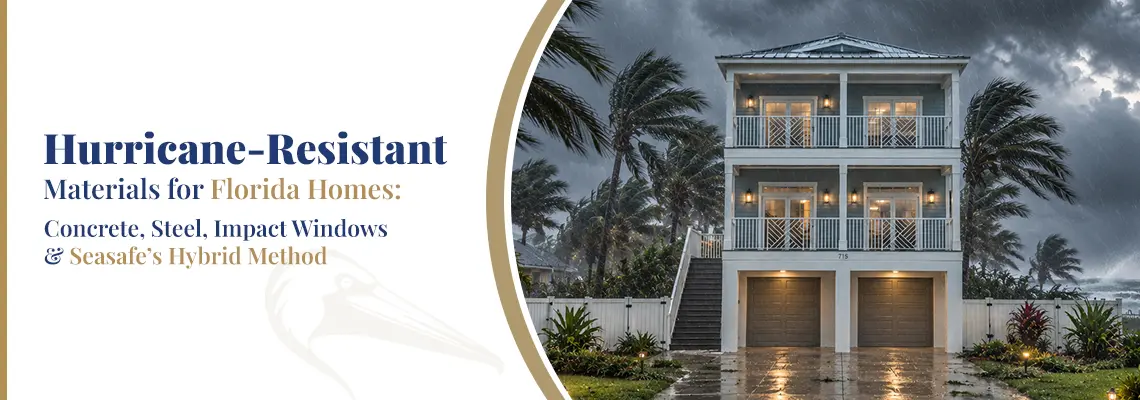
There is no single hurricane-resistant material that does it all. Reinforced concrete, steel, and impact-rated windows each protect a different part of a Florida home, and Seasafe Homes combines all three into one engineered system rather than relying on just one.
Building a home near the Florida coast means thinking about more than the floor plan, finishes, and view. The materials you choose affect how the home handles during storm high winds, flying debris, heavy rain, and the harsh coastal environment factors.
That makes material selection an important part of the home design and planning process. Concrete, steel, and impact-rated windows each serve a different purpose. Their performance depends on how they are engineered and installed as part of the complete home.
Choosing the right materials during planning can significantly affect how a home performs during a hurricane and other extreme coastal weather events. Understanding the building material options and making the right decisions early can also reduce the need for costly upgrades.
To choose the right materials you should start with understanding what each material protects against. It also means knowing where each material performs best and how it works with the rest of the structure. For example, you would not want to use a building material close to the coast that has not shown the ability to withstand saltwater climate exposure. This could lead to constant maintenance and expensive replacements.
In this blog, we explain the key materials used in hurricane-resistant Florida homes, how concrete, steel, and impact windows compare, how Seasafe Homes combines them into one hybrid building method, and what else to consider when building in a coastal area.
What Makes a Home Hurricane-Resistant?
A house can be considered hurricane-resistant when it is designed to handle the forces a major storm can bring. This includes high winds, flying debris, heavy rain, and, in coastal areas, flooding and storm surge.
The materials play an important role, but so does the way the roof, walls, windows, doors, and foundation work together. Flooding and storm surge also need to be considered when the home is in a coastal or flood-prone area.
Here are the factors that make a coastal home hurricane-resistant:
Wind Resistance
High winds can put significant pressure on a home’s roof, walls, and exterior openings. A properly engineered structure helps transfer these forces safely through the building and into the foundation.
Key factors include:
- Materials suited to the local wind conditions.
- Strong roof and wall connections.
- Proper anchoring to the foundation.
- Structural systems designed for the specific property.
Flying Debris Protection
Flying debris can damage windows, doors, and other vulnerable areas during a hurricane. Protecting these openings helps keep wind and rain from entering the home.
Common protection includes:
- Impact-rated windows and doors.
- Tested exterior opening systems.
- Proper installation for the required design pressure.
Roof and Structural Connections
Strong materials alone are not enough if the connections between them are weak. A continuous load path helps transfer wind forces from the roof through the walls and into the foundation.
Important connections include:
- Roof-to-wall connections.
- Wall-to-foundation connections.
- Anchors and fasteners.
- Structural connectors designed for coastal conditions.
Flood and Storm-Surge Considerations
Wind is only one of the concerns that need to be planned for a coastal home. Flooding and storm surge can affect the foundation, lower portions of the structure, and materials exposed to water.
Depending on the property, the design may need to account for:
- Required home elevation
- Foundation type
- Flood-resilient construction
- Moisture and corrosion exposure
See how Seasafe approaches flood-resistant construction for coastal homes in practice.
Seasafe’s Hybrid Method: Combining Concrete, Steel & Impact Windows
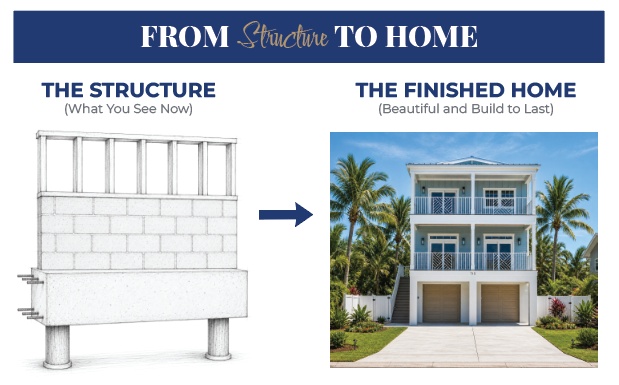
Before looking at concrete, steel, and impact windows on their own, it helps to see how Seasafe Homes already brings them together. Seasafe does not ask homeowners to choose only one of these materials. Our elevated coastal homes are engineered to combine reinforced masonry, steel-reinforced structural systems, and impact-rated openings as one continuous, tied-together structure, rather than relying on a single material to do the job.
Each home starts with elevated foundations such as piling or reinforced masonry wall systems, depending on project requirements, and each foundation is engineered from a site-specific geotechnical study so it is designed for the actual soil at the property, not a default assumption. From there, homes are engineered as a single, tied-together system for three forces. Accounting for downward load, uplift, and lateral pressure. With a continuous uplift load path from roof to foundation. Seasafe living space sections are engineered to a 180 MPH wind rating, with impact-rated windows and doors specified to the same standard.
Reinforced Concrete for Hurricane-Resistant Homes
By now, you know what makes the houses hurricane-resistant. Concrete is another material commonly used in this type of construction.
Concrete systems are often used in homes in hurricane-prone areas, as they form strong continuous wall systems. They can be engineered and reinforced to help a home withstand storm surge, high winds, and flying debris.
Why Does Concrete Perform Well in High Winds?
Reinforced concrete can provide substantial structural strength when combined with proper reinforcement and connections.
The reasons why concrete performs well include:
- High structural strength.
- Strong resistance to wind loads.
- Added protection against flying debris.
- Durable performance in demanding environments.
Benefits and Limitations
Hurricane-resistant concrete, when designed and reinforced as required, can deliver superior structural performance. It is also very durable, which is why it is often used in tough coastal environments.
Some of the benefits include:
- Strong resistance to wind loads
- Protection against flying debris
- Long-term durability
Just like every coin has two faces, this material also has some limitations. These factors should be considered before choosing concrete for a hurricane-resistant home.
Some of the issues include:
- Heavier structural loads.
- Higher material and labor requirements.
- More demanding engineering and installation.
- Additional foundation requirements.
The property’s flood zone, elevation requirements, and site conditions should also be considered. These factors can influence how much a hurricane-resistant home costs in Florida when additional engineering, elevation, or site work is required.
Steel for Hurricane-Resistant Homes
Steel is another material used in hurricane-resistant construction because of its strength and durability. The material can be engineered for high wind conditions.
When properly designed and connected, steel framing can help create a strong structural system. It exceptionally transfers hurricane forces through the home and into the foundation.
The following reasons explain why:
Strength and Durability
Steel has a high strength-to-weight ratio and can be engineered to handle significant structural loads.
Key benefits include:
- High in strength and resilience.
- Consistent structural performance.
- Suitable for high-wind applications.
Benefits of Steel Framing
Hurricane-resistant steel can provide reliable structural performance when the framing, connections, and foundation are designed as one system and professionally installed.
Some of the essential benefits include:
- Strong resistance to wind forces.
- Durable structural framing.
- Precise and consistent manufacturing.
- Reduced risk of warping or twisting.
Coastal Corrosion Considerations
Coastal homes face constant exposure to salt air and moisture. Steel components therefore need appropriate corrosion protection and detailing for the property’s environment.
Important considerations include:
- Corrosion-resistant coatings or materials.
- Proper protection of connections and fasteners.
- Coastal-grade detailing.
- Regular inspection where needed.
Limitations
Even though the steel framing is considered durable, it has limitations like other materials. These issues should be addressed during planning and construction. Such practices help avoid unplanned expenses on repairs.
These include:
- Higher material and installation costs in some projects.
- Need for proper corrosion protection.
- Specialized engineering and installation.
- Thermal bridging that may require additional insulation planning.
Impact-Resistant Windows
Windows are an essential part of coastal homes. They can become a weak point during a hurricane, as broken windows can allow wind and rain to enter the home. This is why coastal home builders install Impact windows as well as local code requirements that outline minimum wind and impact standards.
They are designed with reinforced glass and frames that can withstand tested impact forces. This helps protect the home’s openings during severe weather. They take care of the complete window system, including the frame, anchoring, and installation.
How Do Impact Windows Protect a Home?
Impact-rated windows are built to resist flying debris and remain in place when exposed to high winds. This helps maintain the home’s exterior envelope and reduces the chance of wind and rain entering through a broken or compromised opening.
Key benefits include:
- Protection against flying debris.
- Reduced risk of glass breakage.
- Helps keep wind and rain outside.
- Added protection for the home’s interior.
Impact Windows vs. Standard Windows
While reading about impact windows, you may be wondering: what about the regular ones? Standard windows can work well for everyday use, but they are not necessarily designed to handle the impact and wind pressures of a hurricane or new construction coastal code requirements.
This is why coastal home builders incorporate impact windows in their houses. The main difference is the level of protection each system provides during severe weather.
The following table highlights the key differences:
|
Factors |
Impact Windows |
Standard Windows |
|
Impact Resistance |
Designed and tested to resist flying debris. |
May not be designed for hurricane-related impacts. |
|
Glass |
Uses impact-resistant glass. |
Typically uses standard window glass. |
|
Wind Resistance |
Designed to meet specific wind pressure requirements. |
Wind resistance varies by product and rating. |
|
Frame |
Uses reinforced framing. |
Uses standard framing based on the window system. |
|
Protection |
Helps protect openings from debris, wind, and rain. |
Provides basic protection but may offer less resistance during severe storms. |
|
Installation |
Requires proper anchoring and installation. |
Installation requirements depend on the window system. |
Design Pressure, Testing, and Proper Installation
Design pressure determines how much wind pressure a window system is designed to withstand at a specific location.
The window also needs to meet applicable testing requirements. It needs to be installed correctly so the entire system can perform as intended.
Important factors include:
- Design pressure – The window should meet the wind pressure requirements for the specific property.
- Testing – Look for products that have been tested and approved for the required impact and wind conditions.
- Frame and anchoring – The frame and anchoring system need to be strong enough for the required loads.
- Proper installation – Incorrect installation can affect how the entire window system performs during a hurricane.
Concrete vs. Steel vs. Impact Windows vs. Seasafe’s Hybrid Method: How Do They Compare?
Now that you know how concrete, steel, and impact-rated windows work individually, you might be wondering about the right selection. You should understand that each material serves a different role in protecting a Florida home during a hurricane.
Concrete and steel contribute to the home’s structural strength. Impact-rated windows protect exposed vulnerable areas. What constitutes the appropriate balance depends on the design of the house, its location, its wind exposure, and engineering requirements.
The following table highlights the key differences:
|
Factor |
Concrete |
Steel |
Impact Windows |
Seasafe’s Hybrid Method |
|
Primary Purpose |
Provides strong structural walls. |
Provides strong structural framing. |
Protects exterior openings. |
Combines reinforced masonry, steel-reinforced framing, and impact-rated openings as one system. |
|
Hurricane Protection |
Helps resist high winds and flying debris. |
Helps transfer and resist wind forces. |
Helps protect against flying debris and wind pressure. |
Helps resist high winds, flying debris, and wind pressure together, engineered as a single tied-together structure. |
|
Durability |
Long-lasting and resistant to rot and termites. |
Strong and resistant to rot and termites. |
Designed for demanding weather conditions. |
Long-lasting, corrosion-protected, and designed for demanding weather conditions across every component. |
|
Key Considerations |
Weight, reinforcement, and foundation requirements. |
Corrosion protection and proper connections. |
Design pressure, testing, and installation. |
Foundation engineering, tied-together load path, and the Two-Site Construction Model. |
Why Does Hurricane Resistance Require More Than One Material?
Most individuals compare materials like concrete, steel, and impact-rated windows before choosing to construct a house. It is a fact that these materials protect different parts of the home.
However, using strong materials alone cannot guarantee that the entire structure will perform well during a hurricane.
A home’s roof, walls, windows, doors, and foundation need to work together as one structural system. Each connection must help transfer hurricane forces safely through the structure.
-
Continuous Load Path
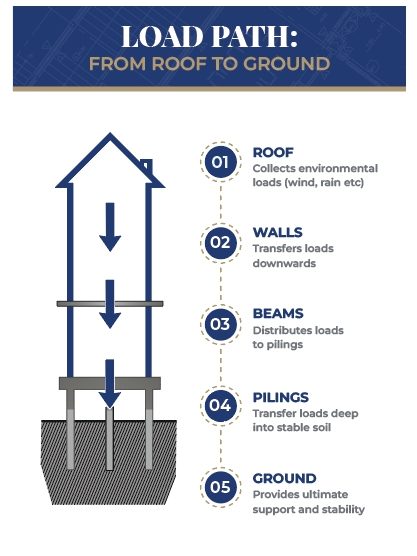
A continuous load path connects the roof to the walls and the walls to the foundation. This allows wind forces to move through the structure instead of placing excessive stress on individual components.
-
Roof-to-Wall Connections
Strong roof-to-wall connections help keep the roof attached to the rest of the structure during high winds. The connectors, anchors, and fasteners must be selected for the required wind loads.
-
Wall-to-Foundation Connections
The walls also need secure connections to the foundation. Proper anchoring helps transfer forces into the foundation and supports the stability of the entire home.
-
Doors and Garage Doors
Exterior doors and garage doors can become vulnerable points during a hurricane. They should be designed, rated, and installed to meet the wind and impact requirements for the property.
-
Roofing System
The roofing system needs more than durable roofing material. Roof coverings, fasteners, edge details, and connections all play a role in keeping the roof secure during high winds.
Which Hurricane-Resistant Materials Are Best for a Florida Coastal Home?
A house on the Florida coast does not face the same conditions or have the same building code requirements as a home farther inland. Wind velocity, flood exposure, salt air, elevation, and property location are among the factors that can influence the needed materials and structural systems.
That is why there is no single material that works best for every coastal home. You should focus on selecting materials that suit your property needs, local codes, and builder experience. Such decisions will help you connect them into a properly engineered system.
The selection should be based on factors such as:
- Local wind requirements – The home’s design needs to account for the wind speeds and exposure expected at the property.
- Flood zone and elevation – Flood risk can affect the foundation, elevation, and materials used in areas exposed to water.
- Coastal exposure – Salt air and moisture can influence the choice of metals, connectors, fasteners, and other exterior components.
- Home design – The size, shape, roof design, openings, and structural layout all affect material requirements.
- Engineering requirements – Materials need to work together as part of one structural system rather than being selected individually.
How Flood Risk Affects Material and Home Design?
A home can be built to handle strong winds and still face serious damage if flood risk is overlooked. In Florida’s coastal areas, water can affect the foundation, lower portions of the structure, and materials exposed to prolonged moisture.
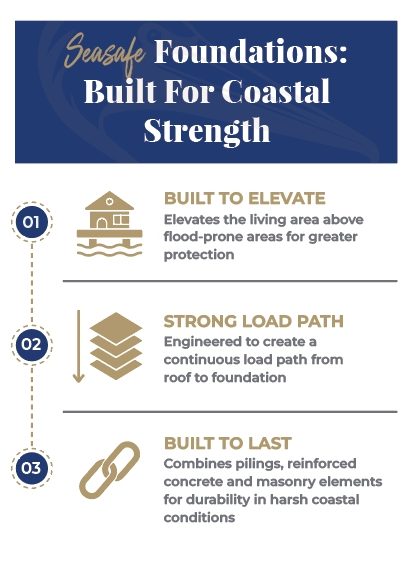
Flood conditions should therefore be considered alongside wind resistance when planning the home.
-
Home Elevation
The required elevation depends on the property’s flood zone, site conditions, and applicable building requirements. Raising the living area above expected flood levels can reduce the risk of water entering the occupied portions of the home. Our guide to FEMA flood zones for Florida coastal homeowners explains what they mean for elevation requirements.
-
Foundation Type
The foundation needs to suit both the soil and flood conditions at the property. Coastal homes commonly require elevated foundation systems that allow water to move beneath the structure.
-
Flood-Resistant Materials
Materials used in areas exposed to floodwater need to be selected for their ability to handle moisture and water exposure. This can include durable structural components, appropriate finishes, and materials that are less vulnerable to water damage.
-
Moisture and Corrosion Protection
Water is not the only concern. Coastal homes have to worry about humidity, salt air, and moisture exposure. Professional construction methods along with corrosion-resistant components can help protect structural connections and other vulnerable areas over time.
Build with Seasafe Homes for Hurricane-Ready Coastal Living
The right hurricane-resistant building materials can help a Florida coastal home handle high winds, flying debris, moisture, and other storm-related pressures. However, the materials will perform best when they are selected and engineered as part of one complete structural system.
At Seasafe Homes, we combine our coastal construction experience with flood- and hurricane-resilient home designs built for Florida conditions. Our Two-Site Construction Model supports reduced timeline risk and a streamlined approach to coastal home building.
Our expert teams know how to build a hurricane-resistant coastal home in Florida for demanding coastal conditions. Our homes are designed with FEMA flood requirements in mind, and we manage permitting, inspections, and engineering coordination to support build quality. Property-specific flood zone, elevation, and permitting requirements are addressed directly with the local permitting authority.
Design a strong, beautiful, and hurricane-resistant coastal home by connecting with Seasafe Homes today!
