
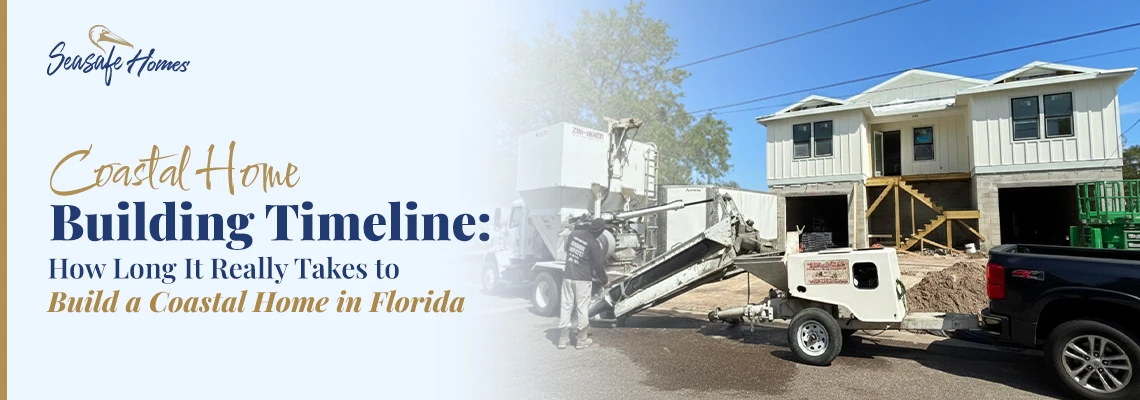
Building a coastal home in Florida is not a standard construction project. Flood zones, wind exposure, permitting layers, and weather risks all affect how long the process takes. Many homeowners begin with one question.
“How long will building a home actually take?”
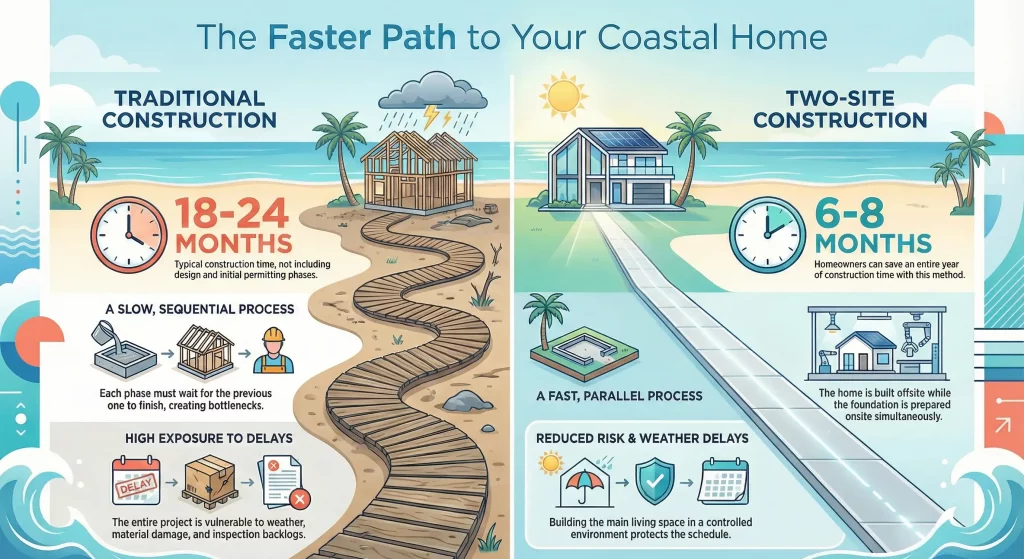
For traditional coastal construction, eighteen to twenty-four months is common. Delays stack up. Weather stops work. Trades wait on each other. Permits move slowly. Costs rise while timelines stretch.
With a Two-Site construction process, experienced coastal builders can reduce timeline risk and compress schedules without lowering standards. Homes that once took well over a year can often be completed in six to eight months under typical conditions and provide the same coastal lifestyle, security, and personalization that homeowners want.
Why Coastal Home Construction Takes Longer
Coastal home construction in Florida involves layers of requirements that do not apply to inland homes. Seasafe Homes plans for these realities from the beginning.
Flood zone elevation requirements
Homes must be elevated above base flood elevation. This affects foundation design, stair systems, utilities, and inspections. Seasafe designs elevation strategies early to avoid redesign later.
High wind load engineering
Seasafe Homes living spaces are engineered to meet up to 180 mph wind ratings. This requires additional structural coordination and review. Seasafe integrates wind design into standard models to reduce delays. This is achieved through a combination of strong materials, engineering processes, and intentional home design characteristics.
Strict municipal and FEMA driven review processes
Coastal jurisdictions apply more scrutiny. It is necessary to understand the local codes when designing your elevated home because different cities and municipalities have different requirements to meet. Seasafe has more than 20 years of experience working with Florida municipalities and flood zone codes, which helps reduce resubmissions.
What makes Two-Site construction different
Two-Site construction allows major phases to happen at the same time. Living spaces are built offsite while foundation and ground floor masonry structural (concrete and steel) work progresses onsite. This parallel approach removes months of idle time.
Typical coastal home building timeline
Seasafe Homes has completed coastal homes in as little as five months. Projects are planned on a six month timeline from start of construction, with typical completion in the six to eight month range depending on finishes, features, inspections, and local conditions.
- Phase 1. Design agreement and model selection
Typical duration: one to two weeks
- Phase 2. Engineering and finish planning
Typical duration: six to eight weeks
- Phase 3. Permitting and approvals
Typical duration: two to six weeks
- Phase 4. Two-Site construction and home set
Typical duration: ten to twelve weeks
- Phase 5. On-site finishes and final construction
Typical duration: eight to twelve weeks
| Phase | Timeline |
|---|---|
| Design agreement and model selection | 1-2 weeks |
| Engineering and finish planning | 6-8 weeks |
| Permitting and approvals | 2-6 weeks |
| Two-Site construction and home set | 10-12 weeks |
| Onsite finishes and final construction | 8-12 weeks |
Coastal construction timeline compared to traditional construction
Traditional coastal construction often takes eighteen to twenty-four months on construction time in addition to the permitting and home design phases. Two-Site construction commonly delivers homes in six to eight months by overlapping phases and reducing weather exposure. It is reasonable for a homeowner to expect to save a year of construction time with the two site process compared to the traditional coastal building timeline.
What affects the coastal home timeline
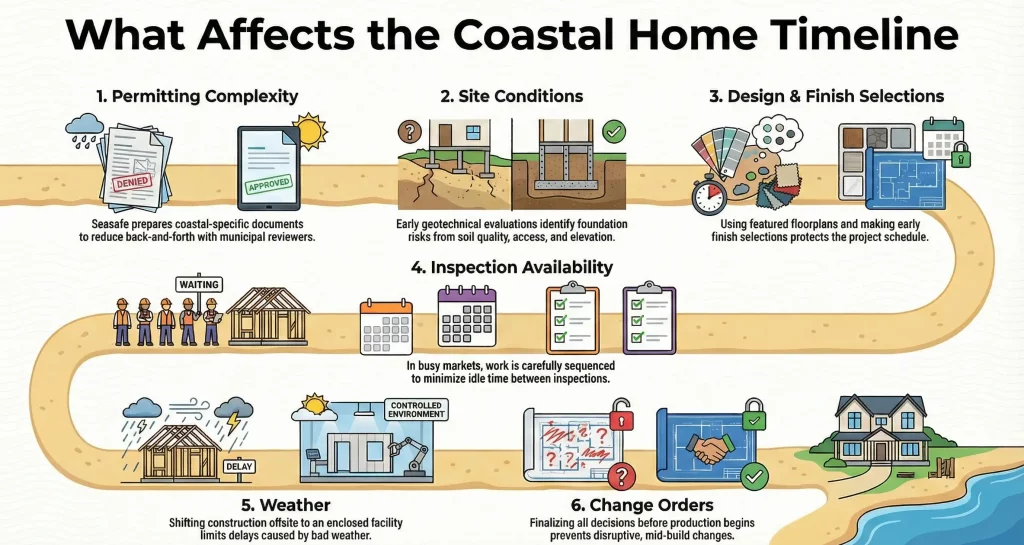
Permitting complexity
Each municipality reviews plans differently. Seasafe prepares permit sets with coastal-specific documentation to reduce back and forth.
Site conditions
Soil quality, access constraints, and lot elevation affect foundation work. Seasafe evaluates sites early to identify risks before construction begins with geotechnical boring, soil testing, topographic surveys, and site planning.
Design and Finish selections
Custom floorplan designs and finishes increase coordination time. Seasafe encourages the Seasafe featured floorplans and early finish selection to protect the schedule. Featured plans are designed to create an open coastal feel with open floorplans and plenty of indoor – outdoor living spaces.
Inspection availability
Busy coastal markets create inspection bottlenecks. Seasafe sequences work to minimize idle time between inspections.
Weather
Heavy rains primarily affect onsite foundation work. Two-Site construction limits weather exposure by shifting living space construction offsite. Traditional construction sites are greatly impacted by stormy weather conditions, offsite construction is not since it takes place in an enclosed building environment.
Change orders
Regardless if a homeowner is using a traditional builder or two site construction specialist, mid-build changes (change orders) disrupt sequencing. Seasafe works with clients early to finalize decisions before production begins. Even changes that seem basic may have a domino effect on the build. Here is an example that seems relatively small but has a big impact on the timeline, finish, and design.
Example: Homeowner decides they want a microwave cabinet in their kitchen island. This change may require a redesign of the electrical layout to provide power to the microwave, plumbing drawing change if a dishwasher or sink had to be moved, cabinet order change, and countertop sizing. Possibly even may have to go back into permitting.
How Seasafe Homes Reduces Timeline Risk
Two-Site construction sequencing
Living spaces are built offsite while onsite masonry, concrete and steel structural work progresses. This parallel approach removes months of sequential delay.
Controlled environment living space construction
Living sections arrive onsite approximately 75 to 80 percent complete, protected from weather and material damage. The more work that is completed offsite in the Build Center, the faster the onsite assembly and finish timeline.
Coastal engineering experience
Seasafe integrates flood and wind requirements into standard processes rather than treating them as exceptions. Typical Seasafe standards include materials like impact windows and doors. Having leadership with 20+ years of coastal building experience gives Seasafe Homes an expertise that is not matched by many builders.
Municipal familiarity
Long standing relationships and experience with local building departments reduce review friction. Understanding local process, codes, and documentation needed can be the difference in having your home plans reviewed or having the plans be set aside as an incomplete file.
Clear separation of responsibilities
Offsite production and onsite finishing are managed as distinct phases, improving coordination. Seasafe manages office and field teams using scheduling and task based software systems, focused on managing construction processes and procuring of materials needed to keep the worksite productive.
Checklist for Homeowners Planning a Coastal Build:
Finalize build plans early. Permitting cannot start until the home design is complete. Ground floor layout, floorplan, electrical plan, and cabinet layout are key pieces of the design package that need completed. Using Seasafe featured plans and design packages simplify the build plans and design process by reducing the decision-making process.
Clear decisions protect the permitting and production schedule. Seasafe will provide as much context as possible to help homeowners make confident decisions. Visiting recently built homes, using our design centers, and having access to the Build Center are all ways that can help a homeowner make decisions.
Understand flood zone elevation requirements. Our job will be to know the local requirements and explain what that means to the design of your home.
Know how elevation affects stairs, access, and ground floor use. Ground floor design can be open columns or enclosed with garage doors but the details of how this needs to be engineered and to meet the local codes is what you can count on Seasafe to walk you through.
Make selections early and limit changes. This can affect the timing to submit the building plans. Changing the location of a door or window may not seem like a big change but it may require updates to the engineering of the home plans. We want to avoid restarting a permit or field changes causing a delay in construction.
Avoid mid-build changes, delays and changes are costly to everyone. Changes during construction often reset inspections and schedules.
Choose a builder with coastal experience. Building on the coast is not the same as building on the mainland and requires different structural and foundation considerations.
Experience reduces surprises, delays, and redesign. Knowing how to address questions and issues that may arise with deep pilings, grade beams, and dewatering a job site where the water table is interfering with progress can all be challenges
Plan for realistic timelines. Six months is the goal and has been our typical timeline with Two-Site construction, but local conditions matter.
Regular updates help keep decisions aligned with the schedule and consistent communication. Seasafe will have a point of contact for homeowners to be the point for questions, concerns, and site visit requests. It is important to keep our communication lines open and streamlined into one point of contact so no information is lost or overlooked.
