
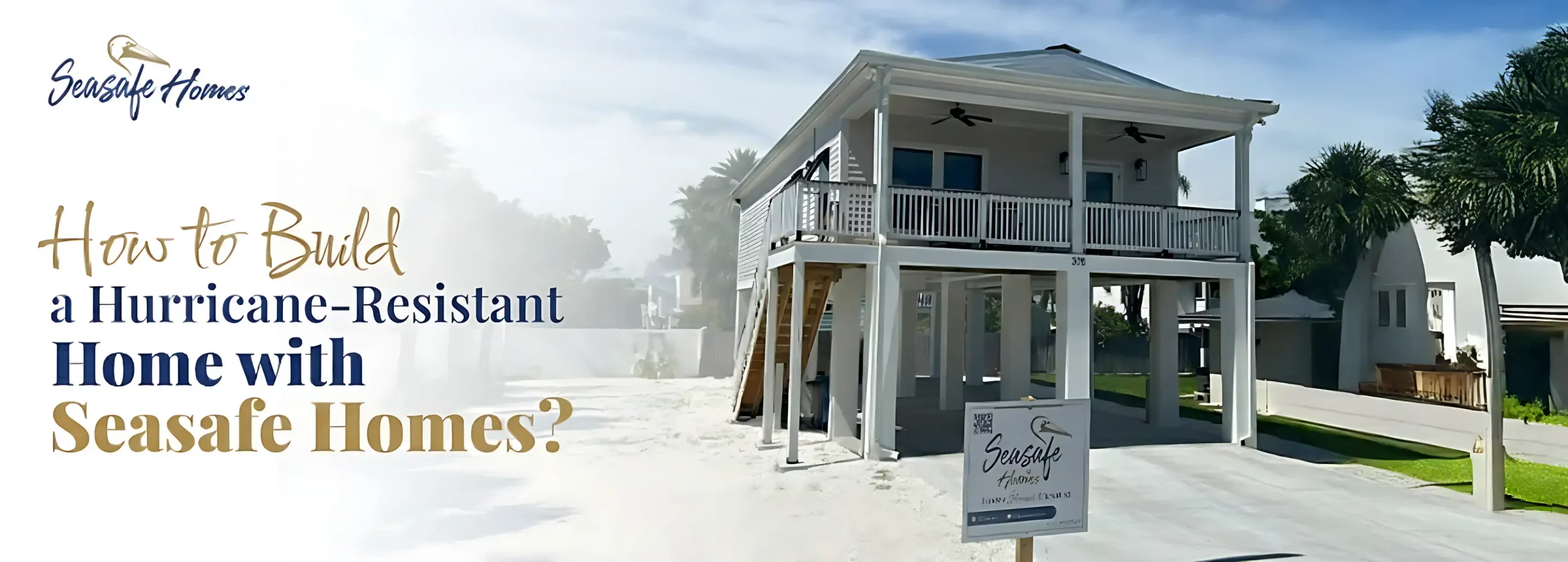
Coastal homes in Florida are built in one of the most demanding environments in the country. Unlike inland properties, they must withstand hurricane-force winds, wind-borne debris, storm surge, flooding, high humidity, and constant salt exposure.
On top of that, strict coastal building codes and floodplain regulations shape nearly every design and construction decision. In these regions, resilience is not an upgrade, it is a requirement.
A hurricane-resistant home is not defined by how it looks from the street. It is defined by how it performs under pressure.
The structural connections, elevation strategy, foundation design, impact-rated apertures, moisture control, and material selection all contribute to protecting the building envelope.
Seasafe Homes approaches coastal construction with these realities in mind. Rather than adapting standard homebuilding practices to coastal conditions, we use a construction process specifically designed for hurricane-prone environments.
This comprehensive piece explains what makes a home truly hurricane-resistant. It outlines how Seasafe Homes designs and builds elevated coastal homes for strength, durability, and long-term performance in Florida’s challenging coastal climate.
What Is a Hurricane-Resistant Home?
A hurricane-resistant home is built to handle three primary forces: wind, water, and pressure. These forces work together during a storm. High winds create uplift and lateral pressure on the structure. Wind-driven rain tests the building envelope. Storm surge and rising floodwaters place hydrostatic and hydrodynamic pressure on foundations and lower levels.
The purpose of hurricane-resistant construction is not to guarantee zero damage in every storm. Instead, the goal is to reduce structural failure, limit weak points, and improve overall performance during extreme weather events. When a home is properly engineered, each part of the structure works together rather than failing independently.
Key characteristics of a hurricane-resistant home typically include –
-
Elevated living areas positioned above the base flood elevation to reduce flood risk.
-
A continuous structural load path that transfers wind forces from the roof down to the foundation.
-
Impact-rated windows and doors designed to resist wind-borne debris.
-
Reinforced connections using straps, anchors, and fasteners that secure framing components together.
-
Materials selected for coastal exposure, including corrosion-resistant hardware and moisture-tolerant assemblies.
In designated flood zones, the elevation strategy becomes just as vital as wind resistance. Homes are often built with elevated foundations such as masonry piers, columns, or pilings. The lower enclosure may include FEMA-compliant breakaway walls, designed to detach under storm-surge pressure without compromising the main structure.
How Seasafe Homes Approaches Coastal Construction?
Seasafe Homes uses a two-site construction process designed for hurricane-prone coastal environments. Instead of building everything on-site in a single sequence, the project is divided into two coordinated phases that run in parallel.
The living structure is built in a controlled off-site facility, while the foundation and structural masonry are constructed on-site simultaneously.
The approach reduces weather exposure during construction and improves schedule predictability. In traditional coastal builds, framing and materials can sit exposed to rain and humidity, leading to delays.
Offsite Phase
The living sections are constructed indoors and typically arrive on-site 75-80% complete. This includes framing, electrical, plumbing, mechanical systems, windows, doors, cabinetry, and interior finishes; all assembled without exposure to weather.
Onsite Phase
Meanwhile, the foundation system is built to meet flood zone and wind load requirements. This includes pilings, reinforced grade beams, masonry walls, and elevated structural systems.
Once both phases are ready, the living sections are placed onto the completed foundation on a set day. Final structural connections and finishing work are then completed on-site.
Homes are typically built within 6 to 8 months of permit approval, depending on site conditions and design details.
How to Build a Hurricane-Resistant Home Using Two-Site Construction?
At Seasafe Homes, building a hurricane-resistant coastal home follows a clear, structured process. From early design conversations to final move-in, each step is planned to meet Florida’s wind, flood, and elevation requirements, while still allowing homeowners to personalize their space.
Here is how the process works –
1. Initial Consultation
Every project starts with a careful consultation. During this step, we talk about your vision, budget, lifestyle needs, and property location. We examine surveys, site characteristics, flood zone information, and any available soil or elevation data.
The goal is to understand both your design preferences and the structural demands of building safely along the coast.
2. Design Agreement and Floor Plan Selection
Next, we guide you through selecting a floor plan that fits your needs and can be customized. Plans are designed to balance open, functional living spaces with structural integrity.
Engineering considerations including wind loads, elevation requirements, and foundation strategy are integrated into the design from the beginning, not added later.
3. Finish Selection and Site Engineering
While you select exterior styles, colors, and interior finishes, our engineering team conducts a full homesite analysis.
This includes:
- Survey review
- Geotechnical soil testing
- Flood elevation requirements
- Zoning and setback compliance
These details determine the appropriate foundation system, which may include reinforced pilings, masonry supports, or raised structural platforms designed to withstand storm surge and severe winds.
4. Building Agreement and Permitting
A detailed building agreement outlines pricing, materials, allowances, and structural specifications including impact-rated windows, roofing systems, and coastal-rated components.
Once finalized, our team prepares and submits structural, elevation, and site plans to local authorities. Because permitting requirements vary by municipality, plans are developed with local compliance in mind to help minimize delays.
5. Two-Site Construction Begins
After permits are approved, construction starts in two coordinated phases –
Onsite:
Foundation systems are built on-site. This includes pilings, reinforced slabs, masonry walls, and elevation systems designed to withstand floods and winds.
Offsite:
At the same time, the home’s main living areas are built indoors in a climate-controlled facility. Framing, electrical, plumbing, windows, doors, cabinetry, and many interior finishes are completed without exposure to weather.
6. Living Section Delivery and Set Day
The set day is when the living sections (modules) are placed onto the elevated foundation using a crane. Sections are aligned, secured, and connected in accordance with engineered plans to maintain structural continuity.
7. Final Completion and Walkthrough
After placement, crews complete exterior elements, including stairs, railings, shutters, and trim, as well as final interior connections for plumbing, HVAC, and electrical systems.
A final inspection and walkthrough ensure everything meets both building code and homeowner expectations. Once approved, the certificate of occupancy is issued, and the home is ready for move-in.
Through this step-by-step approach, two-site construction combines structural planning, engineering precision, and controlled building methods to deliver a coastal home designed for long-term performance in Florida’s hurricane-prone environment.
Key Design Features of a Hurricane-Resistant Coastal Home
Building along the coast requires more than standard construction methods. A hurricane-resistant home must manage wind, water, corrosion, and strict code requirements all working together as a single system. Below are the core design elements that support long-term performance in Florida’s coastal environment.
-
Elevated Foundations and Living Areas
Storm surge and flooding are among the greatest risks to coastal homes. Elevating the main living space above base flood elevation diminishes the likelihood of water damage and allows stormwater to flow beneath the structure.
Foundations are designed based on site-specific soil reports, flood zone requirements, and local building codes. Systems commonly include deep pilings (often 25+ feet), reinforced grade beams, concrete slabs, masonry columns, and structural walls.
In certain zones, breakaway walls may be used at ground level. These walls are designed to give way under severe storm surge without compromising the elevated structure above.
-
Continuous Structural Load Path
Wind forces must travel safely from the roof down to the foundation. A continuous structural load path ensures that uplift and lateral forces are transferred through the entire structure rather than concentrated in weak points.
This system includes engineered straps, anchors, bolts, tie-downs, and reinforced connections. Proper installation and inspection of these components are critical to hurricane performance.
-
Impact-Rated Windows and Exterior Openings
High winds can turn debris into dangerous projectiles. Impact-rated windows and doors help protect the building envelope from breach.
If a window fails during a hurricane, internal pressure can build rapidly, increasing the risk of structural damage. Impact-rated openings reduce this risk and are integrated into wall systems engineered for coastal wind loads.
-
Walls, Framing, and Coastal-Grade Materials
Coastal homes are constantly exposed to humidity and salt air. Wall assemblies are constructed with lumber, metal strapping, and reinforced framing systems that meet wind-resistance standards.
Materials are selected for durability and corrosion resistance. Additional reinforcement may be included in critical structural areas to strengthen performance during extreme weather.
-
Flood Vents and Water Flow Management
In flood zones, enclosed areas below the elevated living space must allow water to enter and exit freely. This reduces hydrostatic pressure on structural walls during flooding.
Flood vents are sized and installed in accordance with code. Ground-level layouts may include open parking, storage, or compliant enclosure walls, depending on zoning and elevation requirements.
-
Quality Control Before and After Set Day
Before living sections are placed onto the foundation, a detailed inspection verifies –
-
Structural connections and strapping
-
Electrical, plumbing, and mechanical systems
-
Protection of windows, cabinetry, and finishes
-
Overall weather protection
This inspection process helps reduce rework and ensures consistency before final assembly.
A hurricane-resistant coastal home is not defined by one feature alone. Elevation, structural engineering, materials, drainage, and compliance all work together to create a home designed to perform reliably in Florida’s demanding coastal climate.
Safety & Precautions to Consider When Building a Hurricane-Resistant Home
Designing a structurally sound home is only part of coastal preparedness. Florida homeowners must also consider financial protection, insurance requirements, and long-term risk management. A hurricane-resistant structure reduces vulnerability – but proper coverage and planning protect your investment if a storm does occur.
Beyond strong materials and engineered construction methods, it’s important to think about how your home will be insured, maintained, and protected over time.
Insurance & Financial Protection
Insurance is a critical part of coastal homeownership. Structural features such as elevated foundations, reinforced connections, and impact-rated windows can improve a home’s insurability and may help qualify for wind mitigation discounts. However, coverage requirements vary by carrier and location.
Key policies to consider include –
-
Flood Insurance
Standard homeowner policies typically do not cover flood damage. In designated flood zones, flood insurance is usually required for mortgaged homes. This policy protects against damage caused by rising water, storm surge, and overflow.
-
Windstorm Insurance
In coastal regions, windstorm coverage may be separate from a standard homeowner policy. This protects against damage caused by hurricane-force winds, including roof, structural, and interior damage.
Permitting and Compliance
Coastal construction is heavily regulated. Elevation rules, setbacks, wind zones, and floodplain requirements vary by municipality.
Proper planning and code compliance are essential to avoid delays. Structural and elevation plans must align with local regulations before construction begins.
Building a hurricane-resistant home strengthens structural performance, but pairing strong construction with appropriate insurance coverage ensures both physical and financial resilience in Florida’s coastal environment.
Why Homeowners Choose Seasafe Homes?
Building in a coastal flood zone requires more than standard construction experience. Homeowners often prioritize clarity, structural planning, and a process tailored to hurricane-prone environments.
Seasafe Homes is often selected for its structured approach to coastal construction and focus on performance-driven design.
Key reasons include –
-
20+ years of coastal and flood zone construction experience
Familiarity with elevation requirements, wind zones, soil conditions, and local permitting across Florida’s coastal regions.
-
Two-Site Construction Process
Parallel off-site and on-site building reduces weather exposure during construction and improves schedule predictability.
-
Engineered structural systems
Foundations, load paths, and connections are designed to meet hurricane wind and flood standards from the start.
-
Quality control before and after the set day
Inspections verify structural integrity, system installation, and finish protection before final assembly.
-
Faster overall build timelines
Coordinated construction phases typically allow completion in 6 to 8 months from permit approval, depending on the project scope.
For homeowners building in demanding coastal conditions, the combination of experience, engineering focus, and process structure provides greater confidence throughout the build.
Frequently Asked Questions:
-
Are Seasafe Homes designed for hurricanes?
Seasafe builds elevated coastal homes designed for Florida coastal conditions, using elevated foundations, continuous load paths, reinforced connections, and impact-rated windows and doors where required. Final design depends on the site, local code, and permit review.
-
How long does construction take?
Typical post-permit builds run 6 to 8 months, permit issuance to certificate of occupancy. Seasafe has built a home as fast as 23 weeks after permits. Timelines depend on design, site conditions, inspections, and local permitting, and every jurisdiction varies.
-
Are these homes insurable?
Insurance availability, coverage, and any wind-mitigation credits depend on the carrier, the property, and the policy. Seasafe homes are designed to applicable FEMA flood requirements and local flood codes. Confirm coverage questions with your insurance professional.
-
What wind speeds are homes designed for?
Seasafe living space sections are engineered to a 180 MPH wind rating, depending on local code requirements and final design specifications.
-
Is Two-Site Construction the same as manufactured housing?
No. Two-Site Construction is a building method using traditional materials and engineered systems. It is not manufactured or mobile housing.
-
How do you build a hurricane-resistant house?
No home can be guaranteed to withstand every storm, but a home can be designed to resist damage using elevation, reinforced foundations, impact-rated openings, and a continuous load path. Seasafe builds elevated coastal homes designed for Florida coastal conditions.
-
What is the main goal when building a flood- or hurricane-resistant house?
The goal is to reduce structural failure, manage wind and water forces, and protect occupants and property during extreme weather.
-
How can a house be built to survive a hurricane better?
By elevating living areas, reinforcing roof-to-foundation connections, using impact-rated windows, and selecting materials designed for coastal exposure.
-
Making a home more resistant to hurricane damage includes what?
Elevation above flood level, reinforced framing, hurricane straps, impact-rated openings, proper drainage, and code-compliant design.
-
Are there insurance discounts for concrete homes in hurricane-prone areas?
Some insurers offer wind mitigation discounts for certain construction features, but eligibility depends on the carrier and verified inspections.
-
How should a building be designed to withstand a hurricane?
It should include an engineered foundation, a continuous load path, impact protection, and materials rated for wind and moisture exposure.
-
How can you protect your house from a hurricane?
Maintain impact-rated openings, secure loose exterior items, ensure proper drainage, and verify adequate insurance coverage.
-
Is it possible to build a hurricane-resistant house?
A home can be designed to resist hurricane forces, but no home can be guaranteed to withstand every storm. Properly engineered homes can help reduce the risk of damage, depending on design, site conditions, and local code.
-
What part of Florida is safest from hurricanes?
No region is entirely hurricane-free, though inland areas typically face lower storm surge risk than coastal zones.
-
Are houses in Florida built to withstand hurricanes?
Florida building codes include wind-resistance requirements, and the specific requirements for a home depend on its location, design, and local permit review.
-
Can structures be built to withstand a hurricane?
Structures can be designed to resist hurricane forces through proper engineering, materials, and code compliance, though no structure can be guaranteed to withstand every storm.
-
Can a house survive a Category 5 hurricane?
Whether a home survives a Category 5 hurricane depends on storm intensity, windborne debris, storm surge and flood conditions, and how the home is designed and built. A home can be designed to resist wind and water forces, but no home can be guaranteed to withstand every storm.
-
How to build a flood wall around your house?
Flood walls must be engineered to withstand hydrostatic pressure and comply with local codes. Improper design can worsen flood damage, so professional guidance is essential.
-
How to build a house to withstand a hurricane?
Use an elevated, reinforced foundation, provide a continuous structural load path, install impact-rated openings, and comply with local coastal building codes.
